

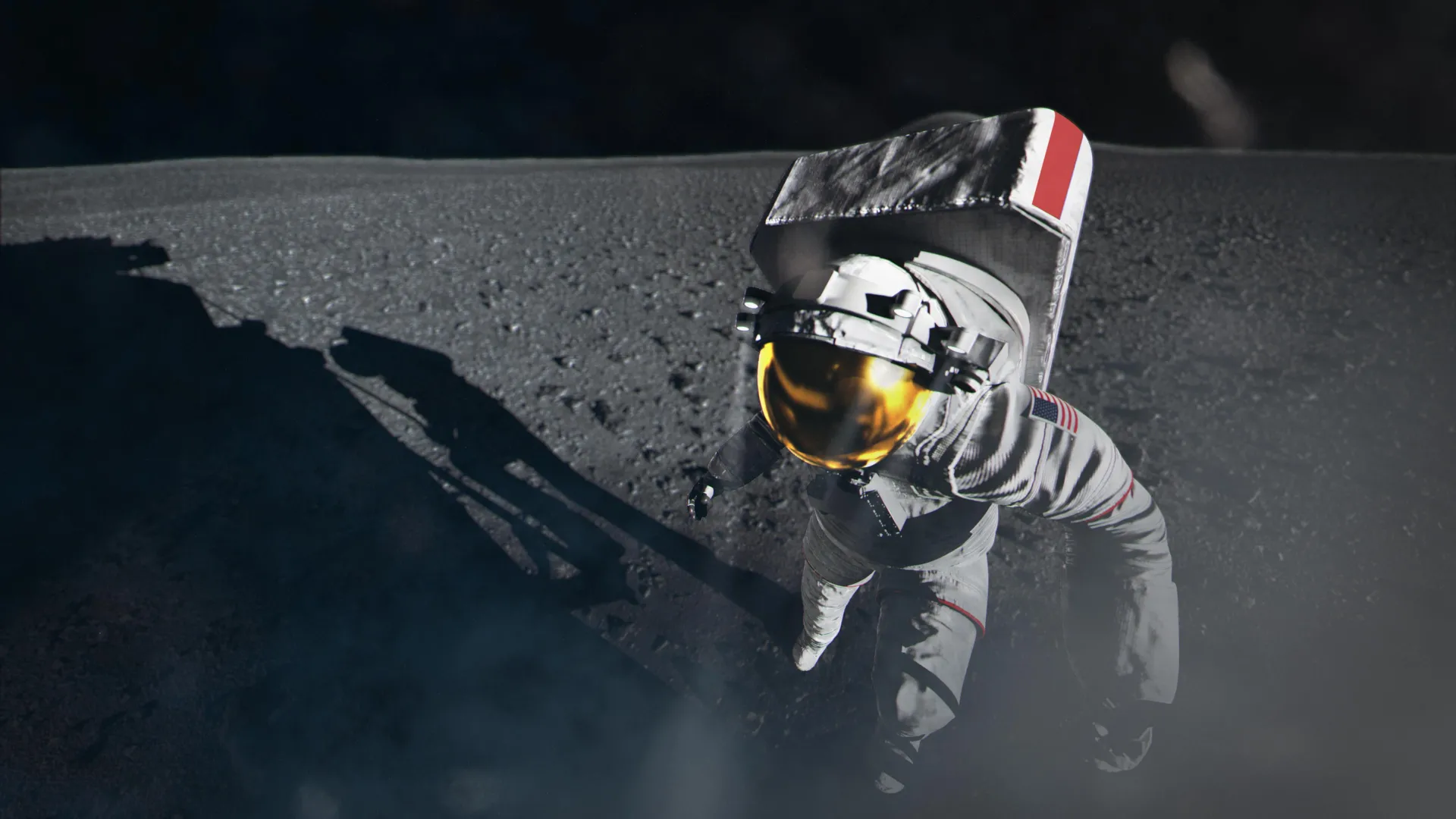
NASA has detailed an updated strategy for its Artemis program aimed at landing American astronauts on the Moon in 2028. Agency leadership, including NASA Administrator Jared Isaacman, presented the revised approach during an October 23 briefing, building on priorities established through NASA’s Ignition initiative earlier in the year. The plan emphasizes reducing technical risks, accelerating development timelines, and leveraging partnerships with private aerospace companies to establish a sustained American presence on the lunar surface.
The centerpiece of the strategy involves two major missions. Artemis III, scheduled for 2027, will serve as a critical test flight conducted in Earth orbit. During this 14-day mission, four astronauts aboard NASA’s Orion spacecraft will practice rendezvous and docking procedures with experimental lunar landers developed by both SpaceX and Blue Origin. The mission will begin with Blue Origin launching its test Blue Moon lander into orbit, followed by Orion’s launch aboard NASA’s Space Launch System rocket. After docking with Blue Moon, Orion will separate and perform a second docking with SpaceX’s Starship test vehicle. Testing both landing systems during a single crewed mission allows NASA to gather operational experience while reducing uncertainties before the 2028 landing attempt.
Artemis IV, planned for 2028, will carry astronauts to the lunar surface using either SpaceX’s Starship or Blue Origin’s Blue Moon Mark 2 lander. SpaceX’s approach involves in-orbit refueling of Starship before the vehicle rendezvous with Orion for the journey to the Moon. Blue Origin’s plan uses additional propulsion stages in Earth orbit to dispatch its lander toward lunar rendezvous in low lunar orbit. Maintaining two potential landing systems provides NASA with greater operational flexibility as development continues.
NASA has also reported significant progress in internal capabilities and cost management. The agency reduced rocket preparation timelines by approximately 50% through processing improvements and achieved a major engineering milestone by redesigning a critical fuel-line component in-house within five months at roughly one-tenth the cost of an external vendor estimate. Additionally, NASA is evaluating two upper stage options for the SLS rocket on Artemis IV, including an extended version of United Launch Alliance’s Centaur V, to preserve scheduling flexibility and avoid dependency on single technical solutions. The agency is also introducing a lighter spacesuit design to facilitate moonwalks.
Article Attribution | Read More at Article Source
Article summary produced by Claude AI