

Scientists from NASA and NOAA announced that the ozone hole over Antarctica reached exceptional proportions during the 2026 season, ranking as the seventh-largest in nearly five decades of satellite observations. The hole peaked on September 18, expanding to approximately 10.5 million square miles, representing roughly 90 percent of the largest ozone hole ever recorded. Between September 7 and October 13, when depletion was most severe, the hole averaged around 9.6 million square miles in area, more than double the size of the continental United States.
A remarkably strong polar vortex—a large-scale wind circulation system over Antarctica—served as the primary driver of the 2026 expansion. Atmospheric disturbances that typically weaken this vortex during August and September were unusually subdued, allowing the wind circulation to remain powerful and extend further from the South Pole than normal. This broader spatial extent created more favorable conditions for chemical reactions that destroy ozone across a wider region. Researchers noted that without international efforts to limit ozone-depleting substances, the hole would have been substantially larger, potentially an additional one to two million square miles.
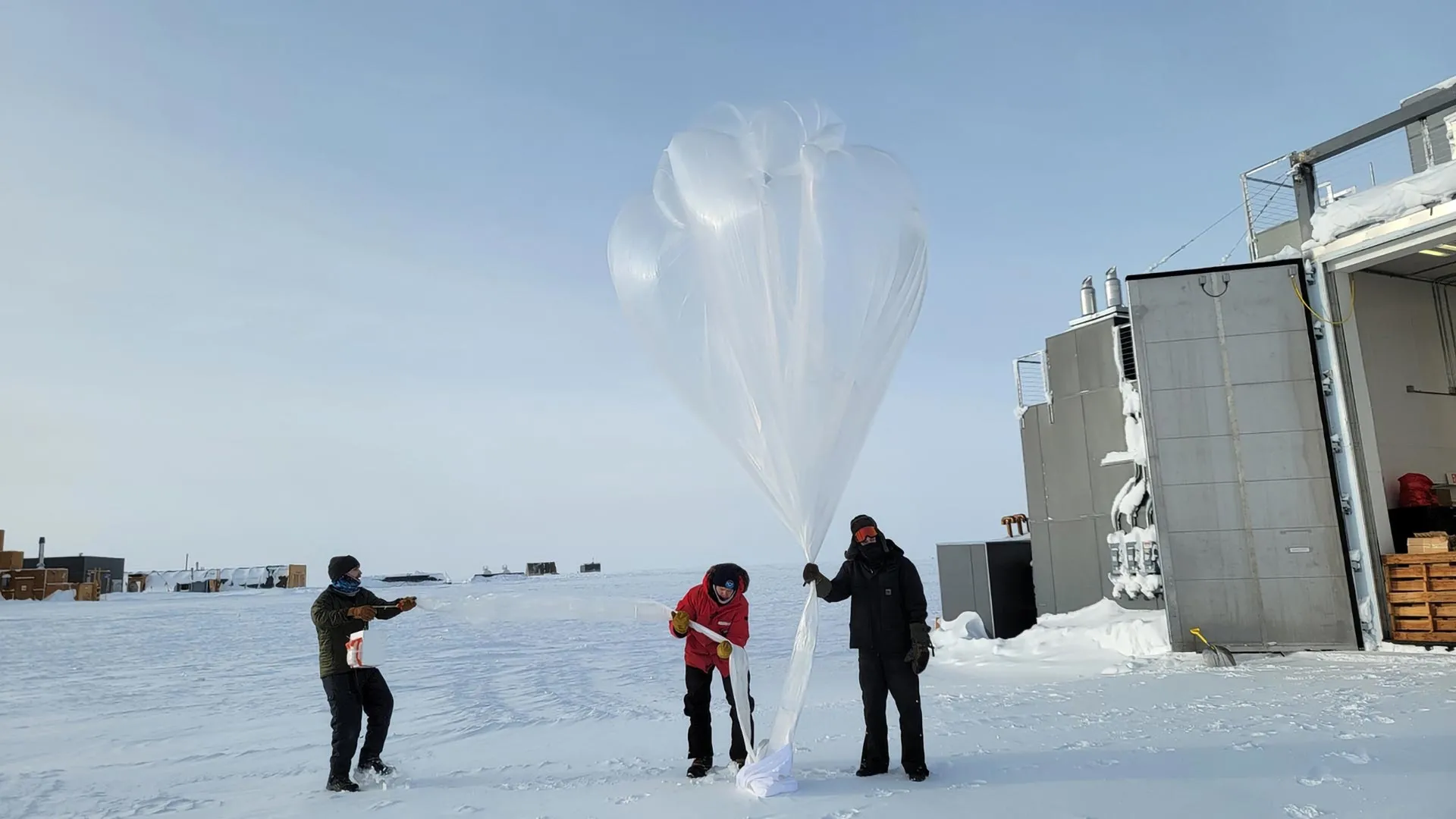
Measurements from ground-based instruments and satellites documented the extent of depletion. NOAA researchers deployed weather balloons and optical measuring devices from the South Pole, recording ozone concentrations that fell to 105 Dobson units directly above the pole on October 17. While this represented significant depletion, it did not match the most severe ozone loss observed in earlier decades. Data collection also incorporated information from multiple satellites, including NASA’s Aura and NOAA polar-orbiting platforms.
Despite the dramatic 2026 expansion, scientists emphasized that Earth’s ozone layer remains on a recovery trajectory. International restrictions implemented through the Montreal Protocol have successfully reduced atmospheric chlorine concentrations by approximately one-third compared with peak levels from the 1980s. These long-term reductions demonstrate the effectiveness of global agreements to phase out harmful chemicals once widely used in refrigeration, air conditioning, and insulation products. Scientists projected that the ozone layer would continue its healing process and return to pre-damage conditions later in the century.
Article Attribution | Read More at Article Source
Article summary produced by Claude AI