

NASA and NOAA scientists documented a significant expansion of Earth’s ozone hole over Antarctica this year, with measurements revealing the depletion reached its seventh-largest extent in nearly five decades of observations. Between September 7 and October 13, the hole covered an average area of approximately 9.6 million square miles, more than twice the size of the United States. At its maximum extent on September 18, the ozone hole spread across 10.5 million square miles, approaching 90 percent of the record size measured in 2000. Despite these alarming dimensions, researchers emphasized that the ozone layer continues on a path toward recovery later this century, with international environmental protections preventing conditions from deteriorating further.
Scientists attributed the hole’s dramatic expansion primarily to an unusually strong polar vortex, a large atmospheric circulation system over Antarctica. Weak planetary-scale weather disturbances in August and September allowed the polar vortex to remain exceptionally powerful and expansive, creating ideal conditions for ozone destruction across a broader geographic region. The vortex traps cold air over Antarctica, facilitating the formation of stratospheric clouds where chemical reactions involving chlorine and bromine atoms destroy ozone molecules. Without ongoing international efforts to reduce ozone-depleting substances, the affected area could have been significantly larger, according to researchers at NASA’s Goddard Space Flight Center.
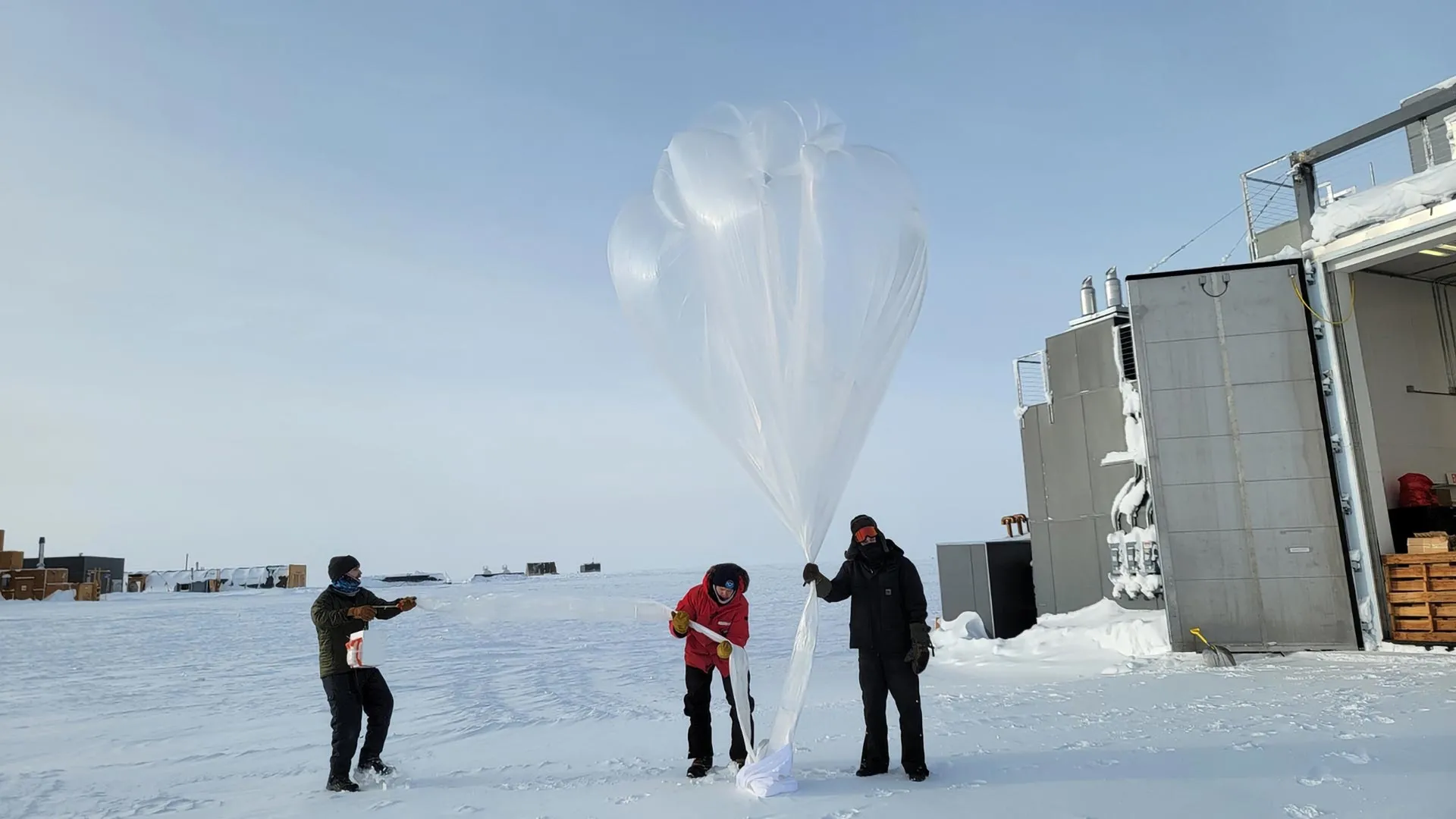
Measurements collected through multiple methods documented the extent of ozone depletion. NOAA researchers deployed weather balloons equipped with instruments from the South Pole and used the Dobson Ozone Spectrophotometer to track atmospheric ozone concentrations. On October 17, ozone levels directly above the South Pole reached their lowest reading of the year at 105 Dobson units, indicating substantial depletion but not approaching the extreme lows recorded in previous decades. Data also came from satellites including NASA’s Aura and several NOAA platforms that have monitored ozone conditions since 1979.
The recovery trajectory of the ozone layer reflects the success of the Montreal Protocol, an international agreement adopted in 1987 to phase out chemicals responsible for ozone damage. Chlorine concentrations in the Antarctic stratosphere have declined by approximately one-third compared with peak levels in the 1980s as nations have replaced harmful chlorofluorocarbons with safer alternatives. These substances, once commonly used in refrigeration, air conditioning, and insulation products, can persist in the atmosphere for decades, meaning the benefits of past restrictions continue to provide protection despite current atmospheric challenges.
Article Attribution | Read More at Article Source
Article summary produced by Claude AI