

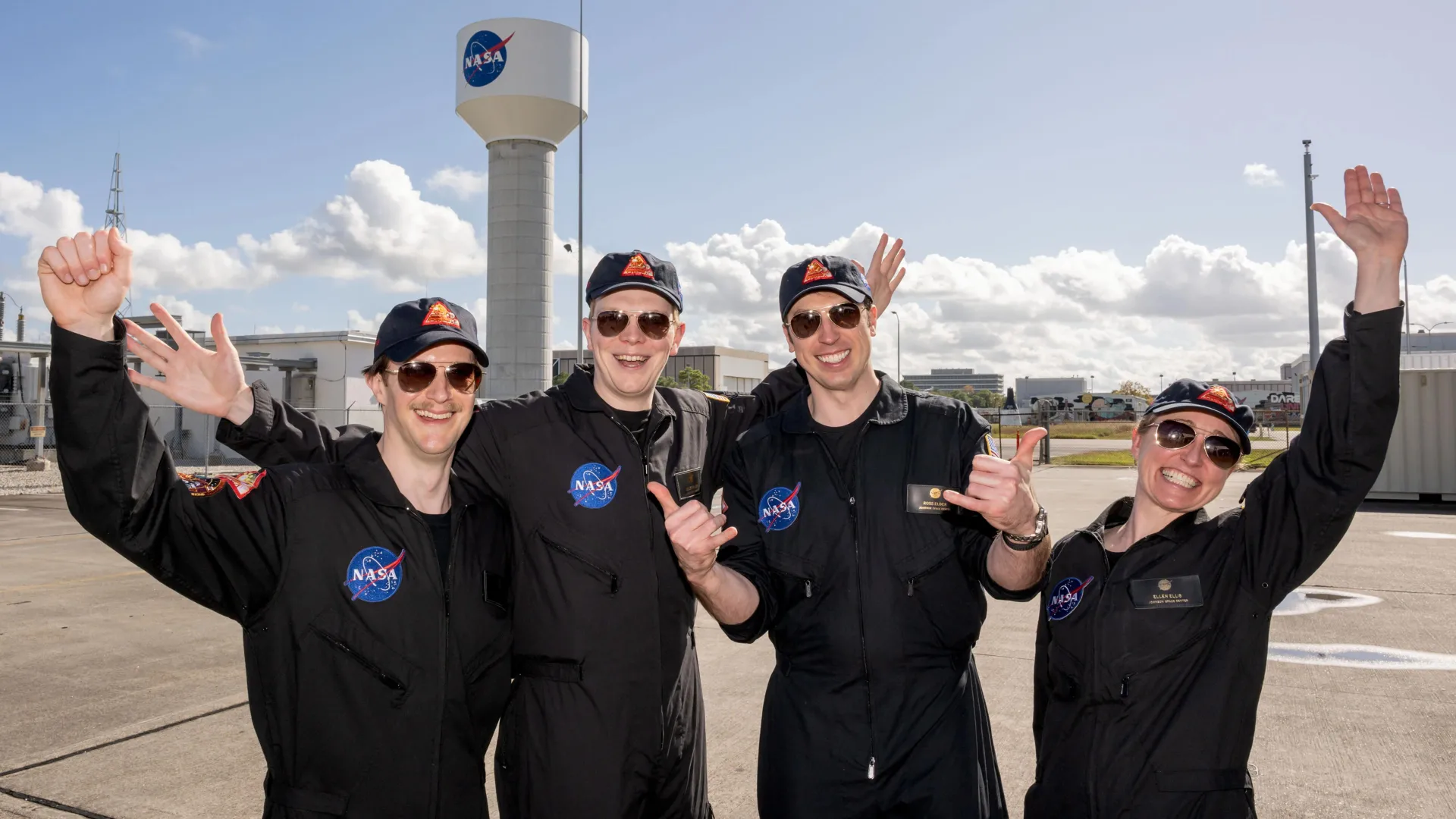
A crew of four volunteers concluded an extended isolation experiment designed to simulate conditions on Mars, with the mission concluding on October 31, 2026. The participants—Matthew Montgomery, James Spicer, Ross Elder, and Ellen Ellis—spent more than a year in a controlled environment on Earth, never leaving the planet but undergoing experiences intended to mirror the challenges of deep space exploration.
Throughout their time in the simulation, the crew performed tasks that future Mars explorers may encounter. These activities included system operations and testing, agricultural work such as crop care, resource management and conservation, and extravehicular operations—work performed outside the habitat. Managing communication delays represented another significant challenge they navigated, as Mars explorers would face substantial signal travel time between Earth and the distant planet, preventing real-time mission control guidance and requiring greater crew independence in problem-solving.
The experiment formed part of NASA’s Crew Health and Performance Exploration Analog (CHAPEA) program, which examines human adaptation to the rigorous demands of extended space exploration. Analog missions are controlled simulations conducted on Earth that reproduce selected aspects of spaceflight, allowing researchers to study human responses in realistic but managed conditions. The program specifically investigates how crews manage critical functions including food supply, equipment maintenance, habitat conditions, and interpersonal dynamics within confined spaces.
The data and observations from this crew’s year-long mission are expected to contribute to NASA’s planning for future human exploration initiatives. The findings will inform the development of lunar base infrastructure and subsequent preparation efforts for crewed Mars missions. By studying how these volunteers handled isolation, resource constraints, technical challenges, and decision-making with delayed communication, NASA aims to address potential obstacles before human explorers undertake actual journeys to Mars.
Article Attribution | Read More at Article Source
Article summary produced by Claude AI