

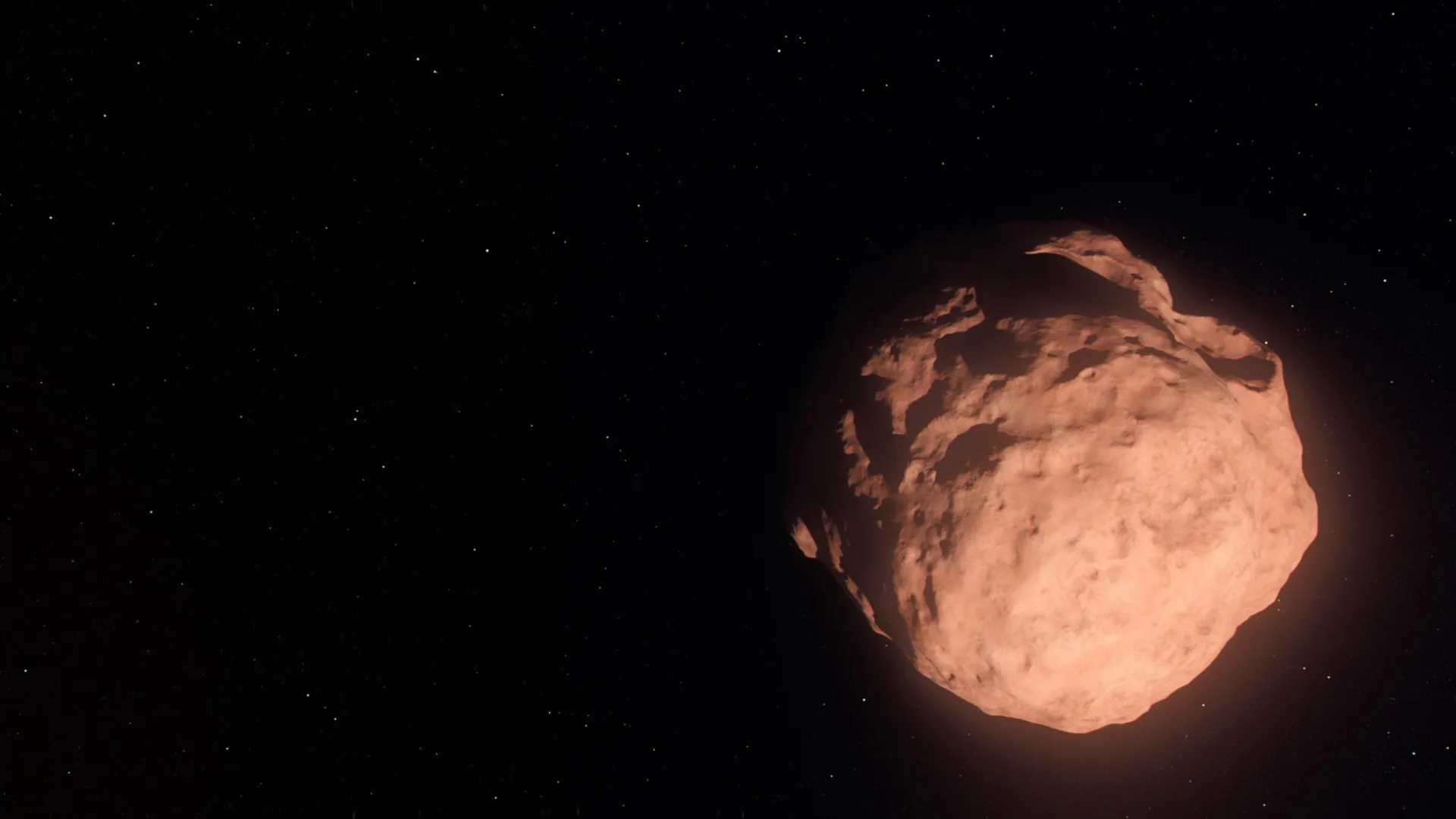
NASA’s Hubble and James Webb Space Telescopes have jointly examined trans-Neptunian objects, the smallest and faintest bodies orbiting beyond Neptune, to understand the earliest stages of solar system formation. Researchers combined visible light observations from Hubble with infrared data from Webb to conduct the deepest survey of these distant objects to date. The investigation led to the discovery of 27 previously unknown objects and revealed findings that challenge existing theories about planetary formation and the evolution of these ancient worlds.
The research focused on two distinct populations of trans-Neptunian objects distinguished by their orbital characteristics. Cold objects have remained relatively close to their original formation regions in circular orbits near the solar system’s main plane. Hot objects experienced more dramatic histories, originally forming between the orbits of Uranus and Neptune before being scattered outward as the giant planets shifted positions early in solar system development. Despite these vastly different trajectories, both populations demonstrated unexpected similarities in their observed properties.
One of the most surprising findings involved the surface characteristics of smaller objects. Scientists had anticipated that billions of years of collisions would have fractured tiny trans-Neptunian objects and exposed fresh material, potentially altering their surface compositions and colors. Instead, even the smallest discovered objects displayed color patterns similar to their much larger counterparts within the same populations. This suggests that these ancient bodies have somehow preserved evidence of their original compositions, indicating either fewer impacts than previously expected or unusual surface resilience following collisions.
The size distribution analysis provided additional insights. Both hot and cold populations exhibited remarkably similar distributions across different object sizes, despite forming in different regions of the early solar system. However, Webb’s observations revealed fewer very small objects than predicted by some existing planet formation models. Researchers noted that the results suggest planetesimal formation processes may have operated consistently across various environments, producing comparable outcomes regardless of local disk conditions. Understanding this shortage of small objects could help refine scientific models of how the solar system’s original planetary building blocks developed.
Article Attribution | Read More at Article Source
Article summary produced by Claude AI