

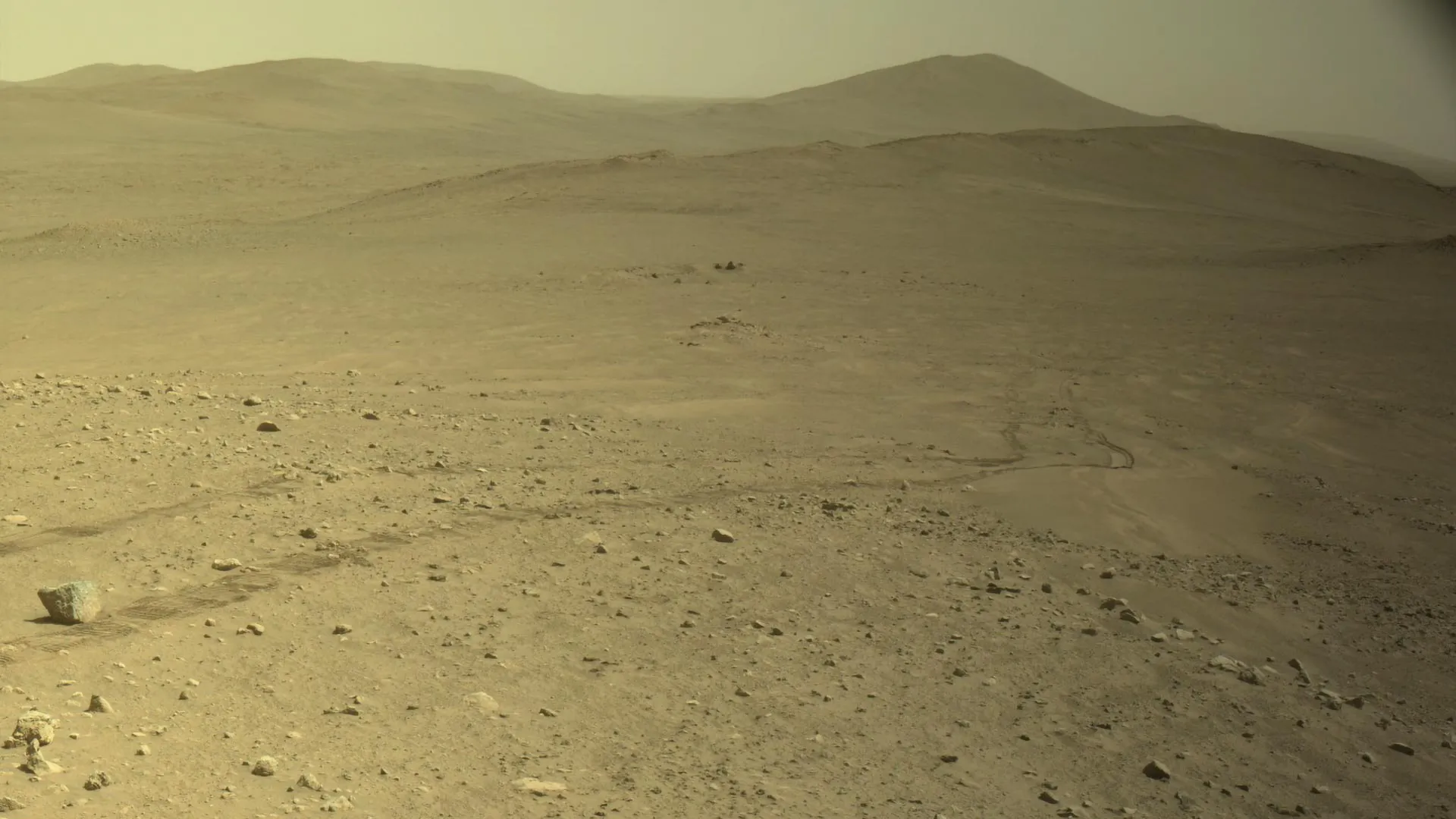
NASA’s Perseverance rover achieved a historic milestone by traveling 45.22 kilometers (28.10 miles) across Mars, establishing a new record for the greatest distance covered by any vehicle on another celestial body. The achievement was officially recognized by Guinness World Records, which presented a commemorative plaque to the rover’s engineering twin on Earth. The rover had come within 200 meters of this record approximately two months prior but prioritized scientific investigations over distance achievement, spending weeks examining ancient rock formations and conducting detailed measurements before resuming travel toward the milestone.
To enable Perseverance to traverse increasingly challenging Martian terrain, NASA engineers implemented numerous technological improvements to the rover’s driving systems. The vehicle’s operational parameters were expanded through thousands of computer simulations, allowing it to tolerate tilts up to 24 degrees and reducing the minimum ground clearance beneath its protective belly pan to 20 centimeters. Additional enhancements included updated braking software to prevent collisions, nearly doubled electrical current limits for steering motors, and the addition of dynamic slip tables to predict wheel slippage on varied surfaces. Engineers also developed techniques for maintaining wheel contact with exposed bedrock when traversing slopes.
A significant advancement in Perseverance’s autonomous capabilities is its onboard Global Localization (GBLC) system, which enables the rover to determine its position on Mars independently without relying on Earth-based navigation assistance. This technology utilizes a commercial processor originally designed for the Ingenuity Helicopter Base Station, comparing surface imagery with orbital photographs to calculate precise global coordinates. This capability increases exploration efficiency by reducing the need for repeated position verification from Earth. However, engineers faced challenges protecting the processor from Mars’s intense radiation environment, ultimately developing specialized software protections to ensure reliable operation.
Looking forward, NASA is exploring how generative artificial intelligence could further enhance the rover’s independence by automating route planning for extended journeys and complex operations. These developments aim to reduce the time and resources required for mission planning while enabling faster and more efficient exploration. The lessons learned from Perseverance’s 45-kilometer journey are already informing next-generation autonomous exploration technologies that could transform robotic operations on distant worlds.
Article Attribution | Read More at Article Source
Article summary produced by Claude AI