

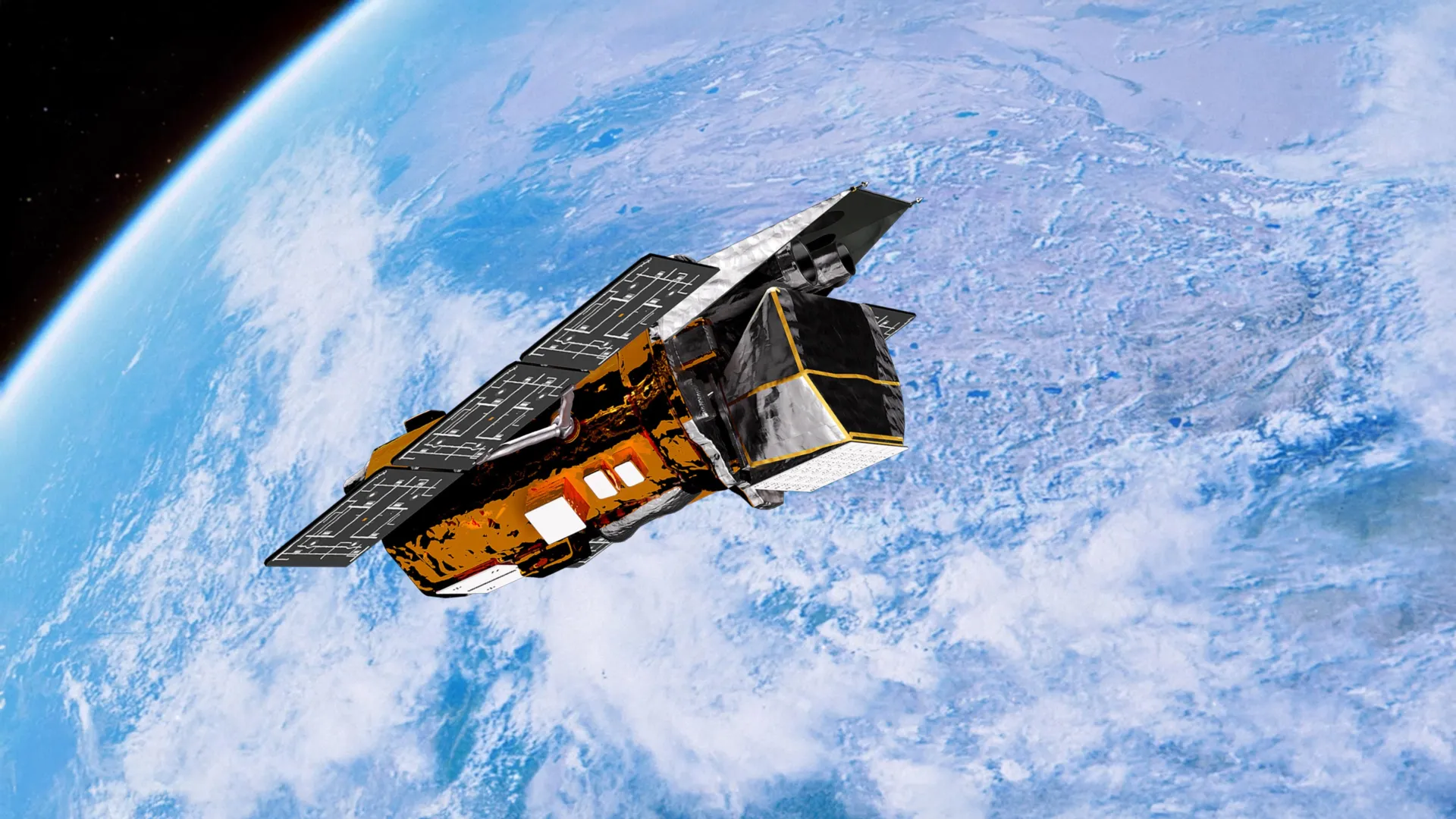
NASA’s Neil Gehrels Swift Observatory completed its mission and returned to Earth on Wednesday, ending nearly two decades of astronomical observation. The spacecraft, launched in 2004, was originally designed for a two-year operational period but continued contributing to scientific research for more than ten times that duration.
The U.S. Space Force reported that the observatory entered Earth’s atmosphere at 7:39 a.m. EST above North Sumatra, Indonesia, at coordinates approximately 3.4 degrees north latitude and 98.6 degrees east longitude. NASA officials stated that most of the spacecraft was expected to burn up during re-entry, though some components might have survived the intense heat of atmospheric friction.
Swift was equipped with three integrated telescopes capable of detecting multiple types of electromagnetic radiation, making it particularly suited for investigating gamma-ray bursts and other high-energy cosmic events. A distinctive feature of the observatory was its ability to rapidly reorient its instruments when detecting sudden astronomical occurrences, allowing it to direct observations toward sources of interest and alert observatories worldwide to coordinate study of brief phenomena before they disappeared from view.
During its operational life, Swift’s scientific scope expanded considerably beyond its initial focus. The observatory contributed to research on active galactic nuclei powered by supermassive black holes, stellar X-ray flares, supernovae, comets, and asteroids. By combining rapid-response capabilities with multi-wavelength observation techniques, Swift enabled researchers to examine energetic cosmic phenomena from multiple perspectives and gain deeper understanding of the physical processes involved.
The mission’s longevity allowed the observatory to accumulate extensive data across diverse areas of astrophysics, leaving a significant legacy in humanity’s understanding of the universe’s most violent and energetic events.
Article Attribution | Read More at Article Source
Article summary produced by Claude AI