

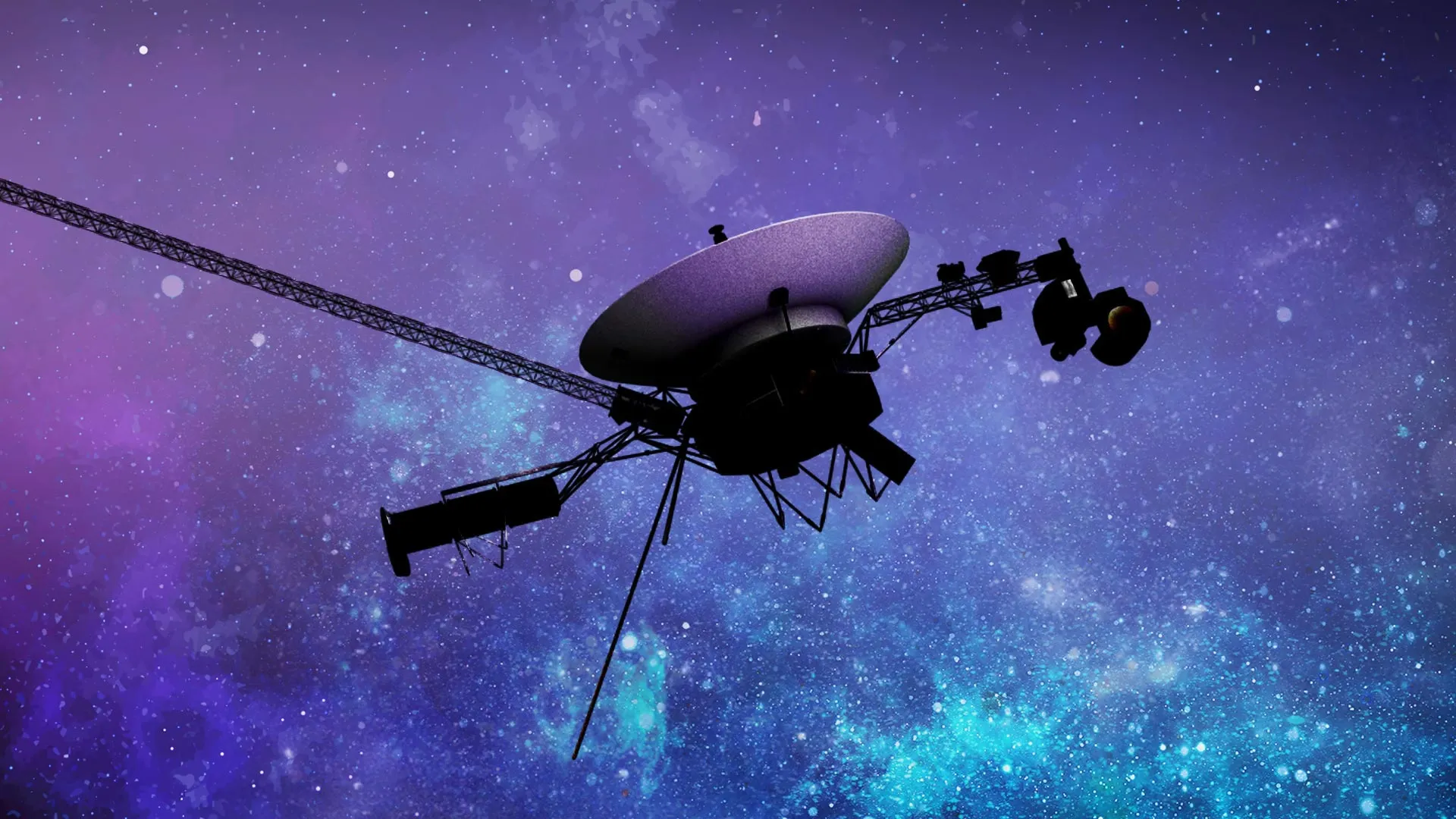
Nearly fifty years after its launch, NASA’s Voyager 1 continues its journey through interstellar space while facing mounting challenges related to its aging power systems. The spacecraft is expected to reach a historic milestone of one light-day distance from Earth on November 18, a distance of approximately 16.09 billion miles. This achievement underscores the remarkable endurance of the decades-old probe and highlights the extraordinary distances involved in deep space exploration.
To extend Voyager 1’s operational lifespan, NASA engineers completed a significant power conservation initiative in early September. The operation, referred to as the “Big Bang,” involved simultaneously replacing three devices with lower-power alternatives designed to maintain proper temperature distribution throughout the spacecraft. This carefully coordinated procedure followed a similar upgrade performed on Voyager 2 approximately six weeks earlier. Both spacecraft rely on radioisotope thermoelectric generators that produce electricity from radioactive decay, resulting in an annual power loss of roughly 4 watts per probe. The conservation effort is expected to preserve the spacecraft’s remaining scientific instruments and prevent the deactivation of additional equipment that would otherwise have become necessary by summer 2027.
Complicating these maintenance efforts, Voyager 1 experienced an unexpected communication interruption in mid-October. NASA’s Deep Space Network lost contact with the spacecraft for approximately 48 hours beginning October 18. When communication was reestablished on October 20, engineers discovered that one of the spacecraft’s thruster systems had ceased functioning and that backup thrusters had automatically activated. This behavior resulted from the spacecraft’s built-in fault protection system, which automatically responds to detected problems by switching to backup hardware and stabilizing the spacecraft’s configuration. NASA has not yet determined the underlying cause of the incident, though investigators continue analyzing data transmitted from the probe.
Voyager 1’s progression into increasingly distant space presents communication challenges that intensify with distance. At one light-day distance, radio signals require a full 24 hours to travel from Earth to the spacecraft, with return signals requiring an additional 24 hours. This two-day communication delay represents a fundamental constraint on mission operations at such extreme distances. Despite these obstacles and the gradual degradation of its power systems, Voyager 1 remains the most distant human-made object in existence and continues collecting valuable scientific measurements from its unique position in interstellar space.
Article Attribution | Read More at Article Source
Article summary produced by Claude AI