

Oyster populations in the Chesapeake Bay have experienced dramatic decline, with stocks depleted by more than 99% by 2011 according to estimates. The collapse has had cascading ecological effects on the bay’s ecosystem. However, recent years have seen modest recovery efforts through expanded farming operations and restoration initiatives, supported by improved management practices and targeted investments.
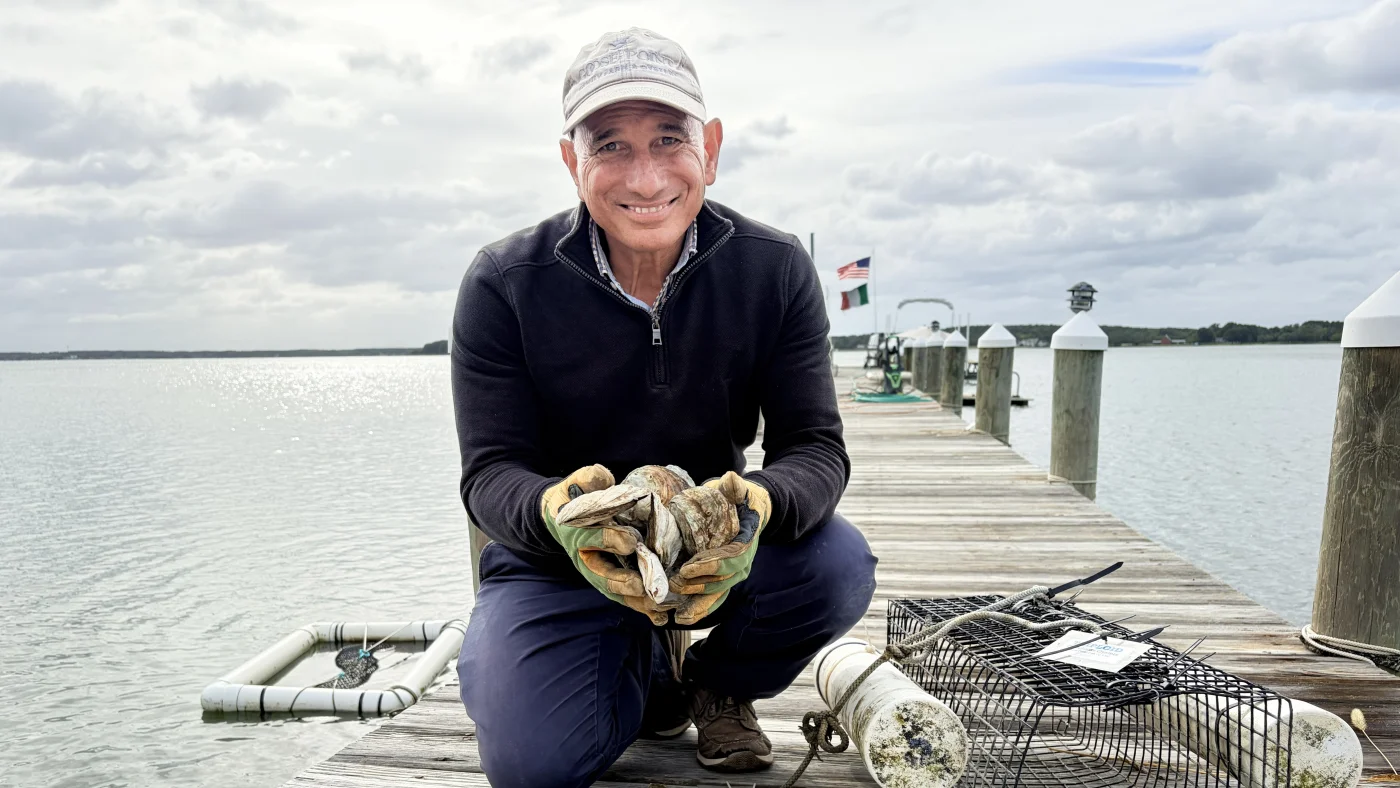
John Consoli, a professional photographer at the University of Maryland, has become involved in oyster conservation after witnessing campus-based research on oyster reef restoration. He now maintains oyster populations in mesh containers positioned near his pier on Kent Island, allowing them to grow rapidly in nutrient-rich surface waters. Consoli emphasizes the ecological significance of oysters, noting that each adult filters substantial quantities of water daily, improving overall bay water quality and creating habitats for numerous other marine species.
Despite recent progress, oyster farming and restoration efforts continue to face substantial obstacles. Mechanical engineer Miao Yu and her team at the University of Maryland have identified two critical challenges: locating appropriate hard substrates where young oysters can settle successfully, and determining optimal timing and locations for harvesting mature oysters. The bay’s limited visibility makes both tasks difficult, resulting in inefficient and sometimes damaging harvesting practices.
To address these challenges, Yu’s research team is developing robotic systems equipped with sonar and artificial intelligence technology to map the seabed and provide farmers with precise information about oyster presence, density, and size. The team operates multiple robots within a testing facility and has conducted field trials along coastlines in Washington state and the Gulf. Yu envisions that within ten years, the technology could be adapted and deployed across United States coastlines to support oyster restoration nationwide.
Article Attribution | Read More at Article Source
Article summary produced by Claude AI