

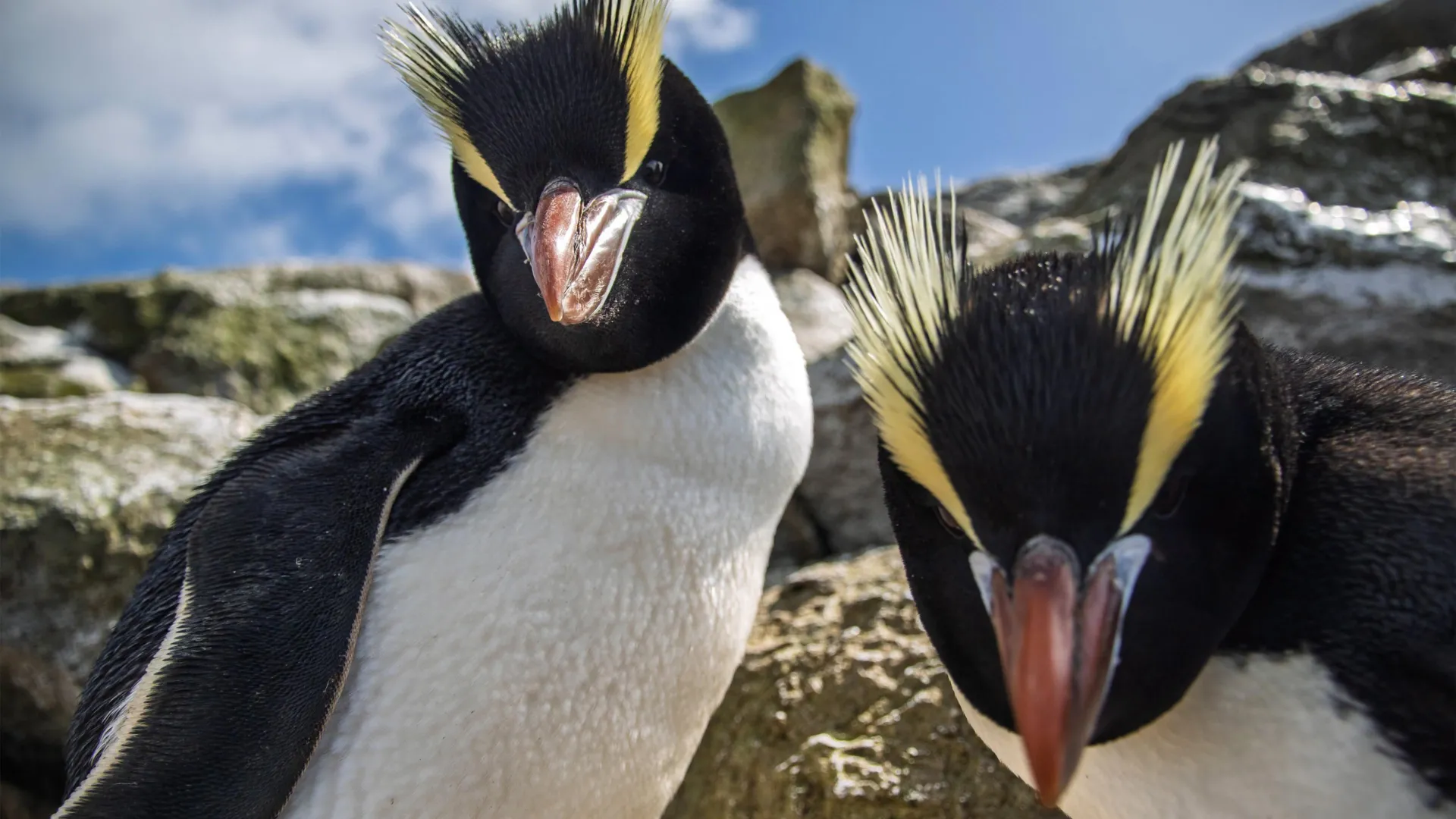
Researchers from the University of Otago have published findings in PLOS ONE documenting a marked divergence in population outcomes for Erect-crested penguins, one of New Zealand’s least studied penguin species. The study, led by Dr. Thomas Mattern of the Tawaki Project and conducted in collaboration with the Antarctic Research Trust and the Global Penguin Society, utilized drone surveys between 2022 and 2024 to conduct the first comprehensive population count of the species across both of its breeding grounds.
The research revealed unexpected population dynamics across the Bounty and Antipodes islands, two remote island groups located approximately 800 kilometers southeast of New Zealand’s South Island. While the smaller Bounty Islands, spanning just 50 hectares, harbor approximately 27,800 breeding pairs, the much larger Antipodes Islands contain roughly 29,800 pairs despite being 40 times the size. More significantly, the Bounty Islands population has remained relatively stable for at least 25 years, whereas the Antipodes Islands population has declined by more than 40 percent since the mid-1990s.
Scientists attribute the divergent trajectories to multiple interacting factors. The declining Antipodes population may face increased predation from skuas, native subantarctic birds that attack penguin eggs and chicks, as the larger colonies have fragmented and lost the protective effects of collective nesting. This pressure may have intensified following a catastrophic collapse of Eastern Rockhopper penguin populations, which likely redirected skua predation toward Erect-crested penguins. Additionally, increasingly severe storms consistent with Southern Ocean climate patterns have caused landslides that further destabilize breeding colonies on the Antipodes Islands. Differences in migratory patterns may also expose the populations to varying environmental pressures, with Antipodes birds migrating considerable distances into Antarctic waters, while Bounty birds remain in more sheltered surrounding waters.
The discovery has prompted researchers to frame the phenomenon as “Schrödinger’s Penguin,” suggesting that examining the species as a unified population obscures the dramatically different circumstances facing individual groups. The Erect-crested penguin currently holds “Endangered” status on the International Union for Conservation of Nature Red List, though conservation implications remain complicated. Applying updated population data could alter the species’ overall threat classification despite one population’s continued sharp decline, presenting a conservation challenge for policymakers.
Article Attribution | Read More at Article Source
Article summary produced by Claude AI