

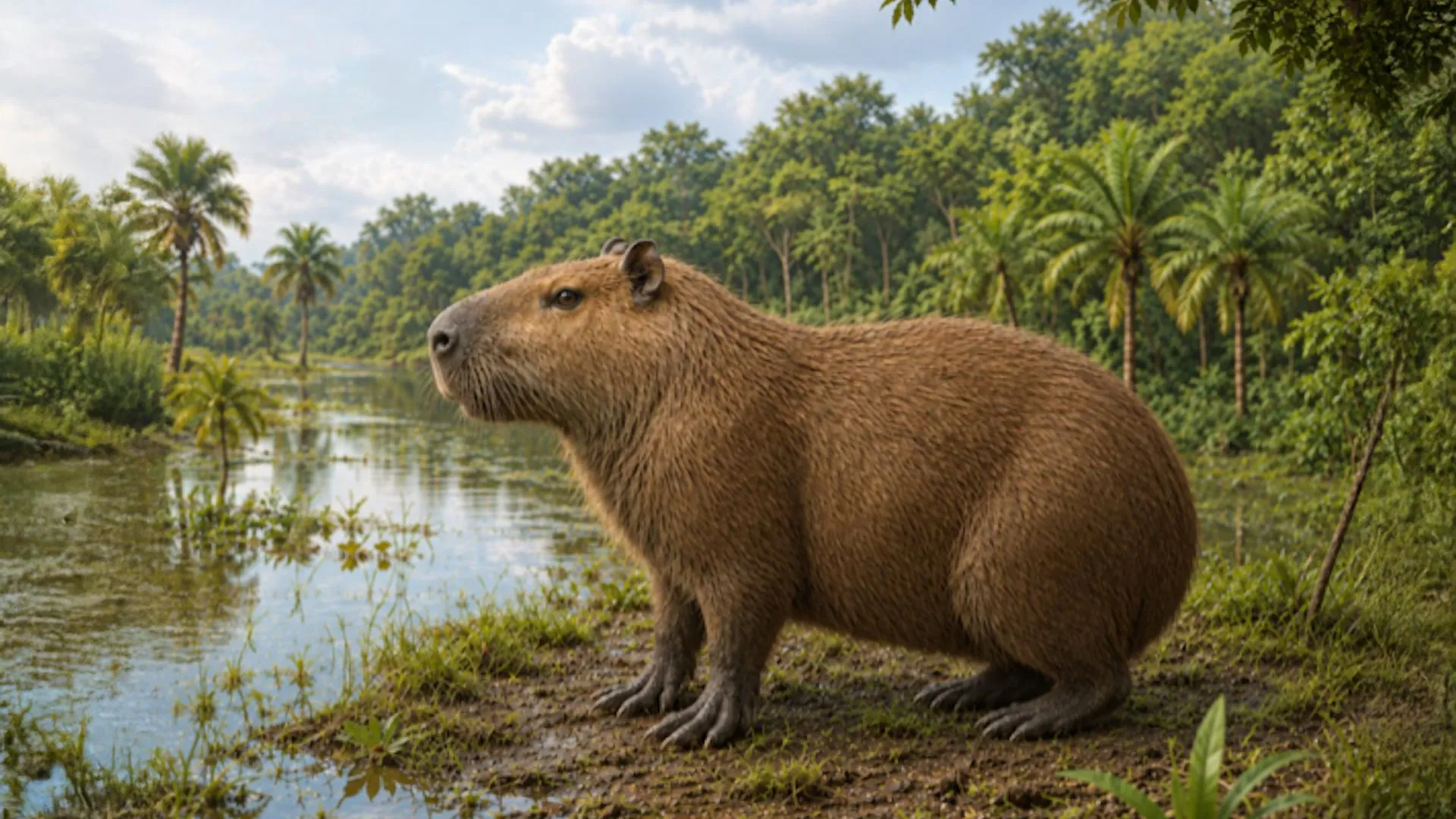
An international team of paleontologists, including researchers from McGill University, has identified a previously unknown species of giant rodent from fossil remains found in southern Thailand. The specimen, designated Yakamys sirindhornae, was discovered at the Bang Mark Pit within the Krabi lignite mine in Thailand’s Krabi Province. The fossils consist of a lower second molar and a lower incisor that display “remarkably large” proportions compared to other rodent teeth from the same era.
The animal is estimated to have lived approximately 34 million years ago during the middle of the Paleogene period. Using seven different analytical methods based on tooth measurements, researchers calculated that Yakamys sirindhornae likely weighed around 30 kilograms—roughly twice the mass of other known rodents from that time period. Scientists note that such estimations from limited fossil material carry substantial uncertainty. The specimen’s name derives from the Thai word “yak,” meaning giant, combined with “mys,” the Greek term for mouse or rat. The species designation honors Princess Maha Chakri Sirindhorn in recognition of her support for paleontological research in Thailand.
The discovery challenges existing scientific understanding regarding the distribution and timing of rodent gigantism. Prior research had suggested that enlarged rodent species primarily emerged in South America during later evolutionary periods. This finding indicates that Southeast Asia played a more substantial role in the early development of giant rodents than previously acknowledged. According to Virginie Millien, a biology professor at McGill University and study co-author, today’s capybara represents the largest living rodent, but the evolutionary development of exceptionally large rodent species occurred repeatedly throughout the group’s history.
The fossils emerged from ongoing international collaboration focused on ancient mammals in the Krabi Basin, involving institutions from Canada, Thailand, and France, including CNRS and Université de Poitiers. Researchers acknowledge that the limited number of identified teeth restricts their ability to reconstruct the animal’s full physical characteristics, ecological function, and evolutionary relationships. Future paleontological discoveries in the region may provide additional insights into how these prehistoric giants lived and their connection to large rodent species found in other parts of the world.
Article Attribution | Read More at Article Source
Article summary produced by Claude AI