

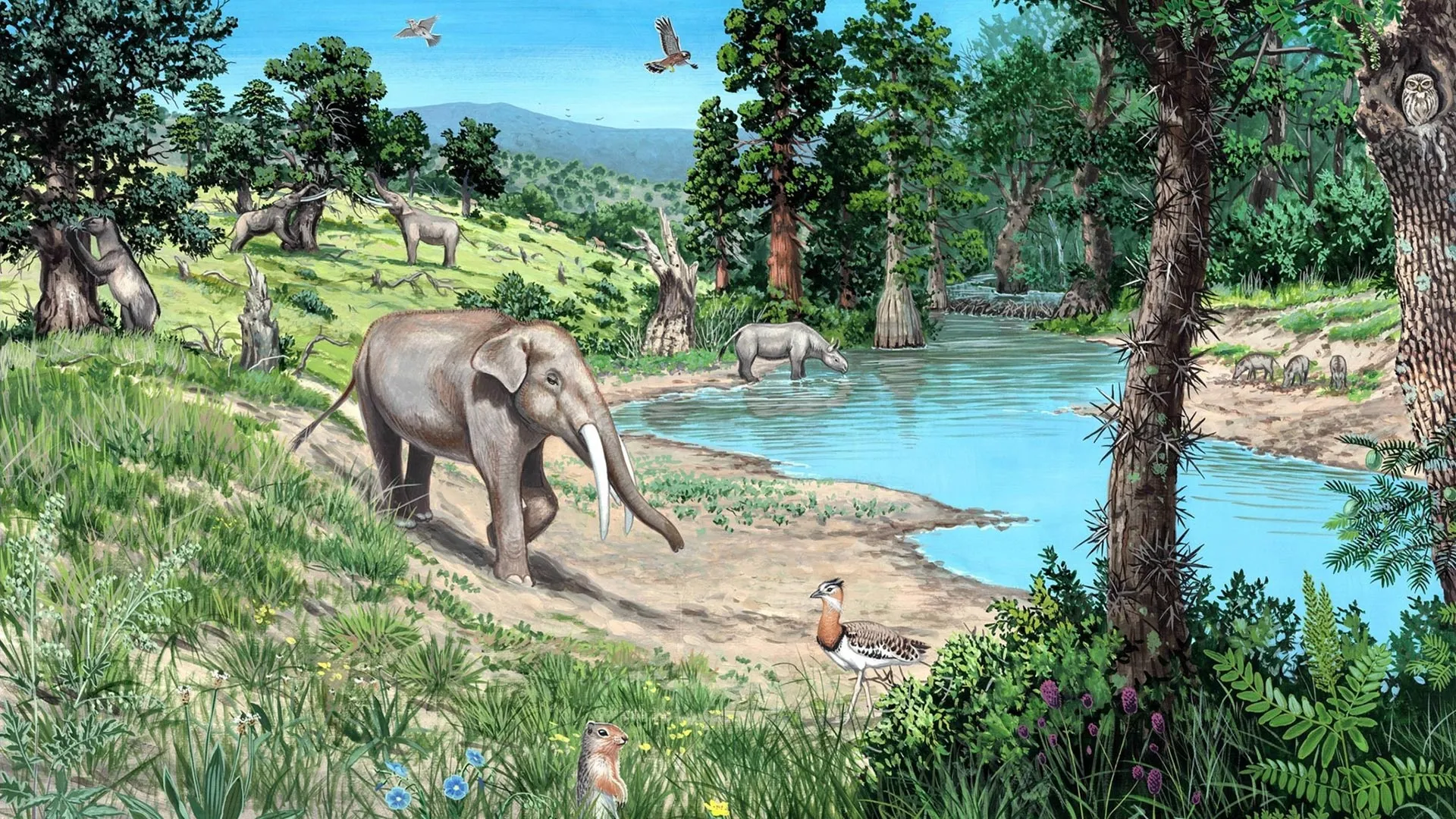
Researchers from Aarhus University have published findings that substantially revise our understanding of Europe’s ancient ecosystems. The study, appearing in Biological Conservation, indicates that much of the continent was characterized by a shifting mosaic of scattered trees, open woodlands, grassy areas, and flowering meadows rather than the dense, continuous forests traditionally assumed to represent Europe’s primordial state. This mixed landscape composition persisted for more than 20 million years across varying climate conditions, from temperate periods similar to today’s climate to warmer and colder epochs.
The research challenges what scientists call the “closed-forest paradigm,” a long-standing assumption that has shaped conservation and reforestation strategies across Europe. This paradigm has led to policies favoring dense forest planting, particularly for climate mitigation and biodiversity protection. However, the findings suggest these approaches may contradict the actual evolutionary history of European ecosystems and the species that inhabit them. Researchers note that current reforestation programs, including those in Denmark and elsewhere on the continent, focus on establishing dense forests, which may ultimately prove counterproductive for biodiversity protection.
To reach these conclusions, the research team examined extensive paleoecological evidence spanning from the Miocene epoch, approximately 23 million years ago, through the pre-industrial period. The investigation combined multiple independent methodologies including fossilized pollen and plant remains, ancient charcoal deposits, chemical signatures in animal bones and teeth, fossil insects and mammals, and environmental DNA preserved in sediments. This multi-pronged approach allowed researchers to reconstruct not only the types of vegetation present but also how ecosystems evolved and how animals influenced their environments.
A particularly significant finding concerns the role of large wild herbivores in shaping Europe’s ancient landscapes. Species including elephants, rhinoceroses, aurochs, and bison helped maintain open habitats through grazing and ground disturbance, which prevented trees and shrubs from dominating vegetation patterns. These animals created and sustained diverse habitat mosaics that supported rich species diversity. Modern Europe, however, lacks these large wild herbivores, and traditional extensive grazing practices have largely disappeared within recent decades, fundamentally altering how vegetation develops across the continent and explaining the dramatic differences between contemporary European ecosystems and their historical counterparts.
Article Attribution | Read More at Article Source
Article summary produced by Claude AI