

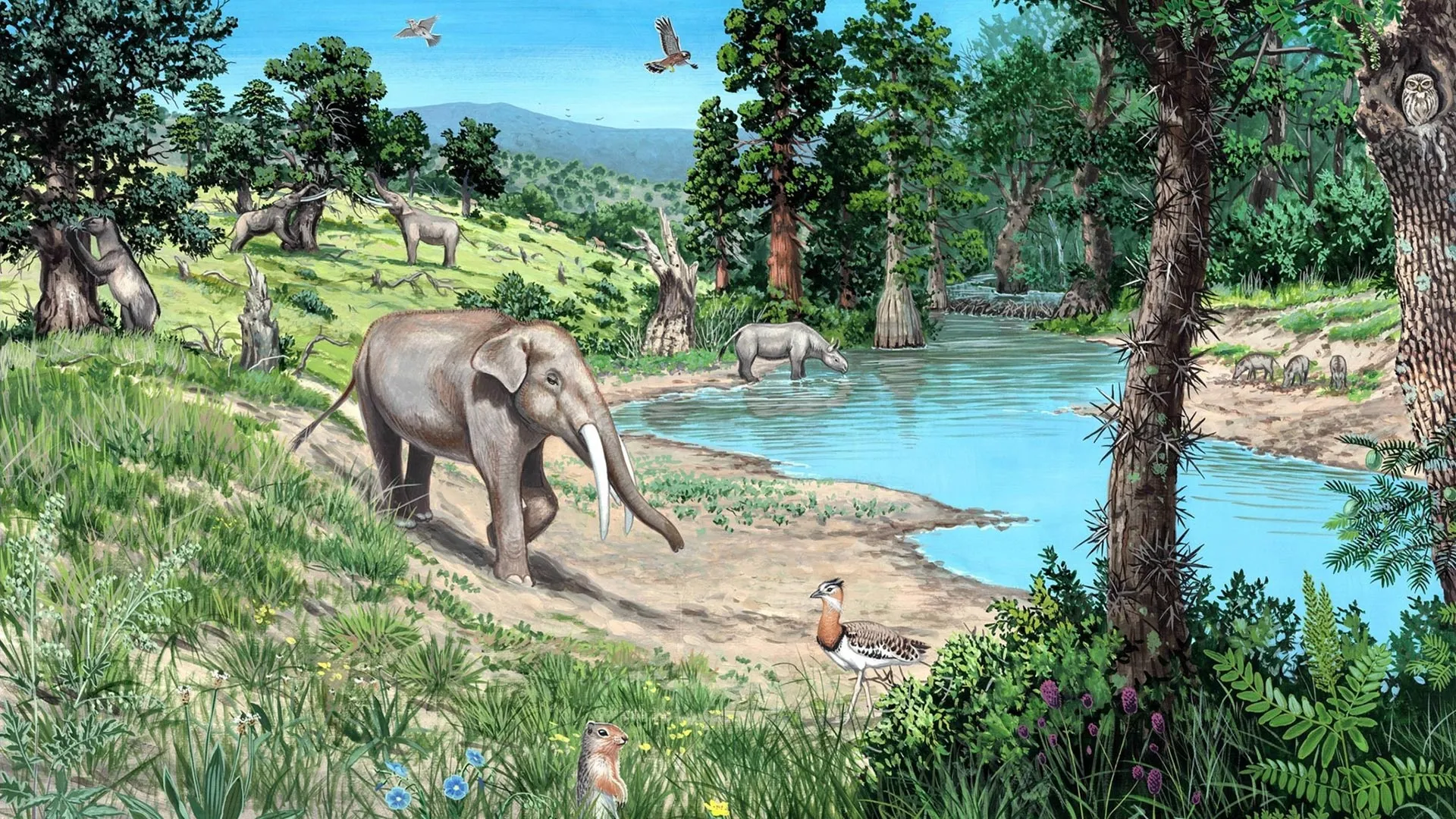
Researchers from Aarhus University have concluded that Europe’s landscapes were fundamentally different from the dense forest image often depicted in conservation efforts. Using evidence spanning from the Miocene epoch through the pre-industrial period, the study indicates that mixed habitats dominated the continent for more than 20 million years, characterized by scattered trees, open woodlands, grassy areas, and flowering meadows rather than continuous dense canopies.
The findings, published in Biological Conservation, challenge what scientists call the “closed-forest paradigm”—the assumption that dense forests represented Europe’s natural state before human intervention. This conventional view has shaped reforestation and conservation strategies across the continent, with many programs focused on establishing thick forest coverage. The new research suggests these approaches may be misaligned with Europe’s actual ecological history and the types of environments that species evolved within.
To reach these conclusions, researchers examined multiple independent lines of evidence including fossilized pollen, charcoal from ancient wildfires, chemical signatures in animal remains, fossil insects and mammals, and environmental DNA from sediments. This comprehensive approach allowed scientists to trace vegetation patterns and ecosystem changes across millions of years with greater confidence than previous single-method studies. The evidence consistently showed that landscapes were typically a shifting mosaic of trees and open spaces rather than unbroken forest.
Large herbivores including elephants, rhinoceroses, aurochs, and bison played a crucial role in maintaining these diverse habitats. Through grazing and movement, these animals prevented tree coverage from becoming dominant and created conditions for grasses and wildflowers to flourish. The disappearance of these species and the decline of traditional grazing practices over the last hundred years have significantly altered Europe’s ecosystems, contributing to present-day landscape differences from ancient times.
According to researchers, current reforestation subsidies that prioritize dense forest planting may contradict the ecological conditions that European species adapted to over millions of years. The study raises questions about whether conservation strategies should be reconsidered to better reflect the continent’s actual ecological heritage.
Article Attribution | Read More at Article Source
Article summary produced by Claude AI