

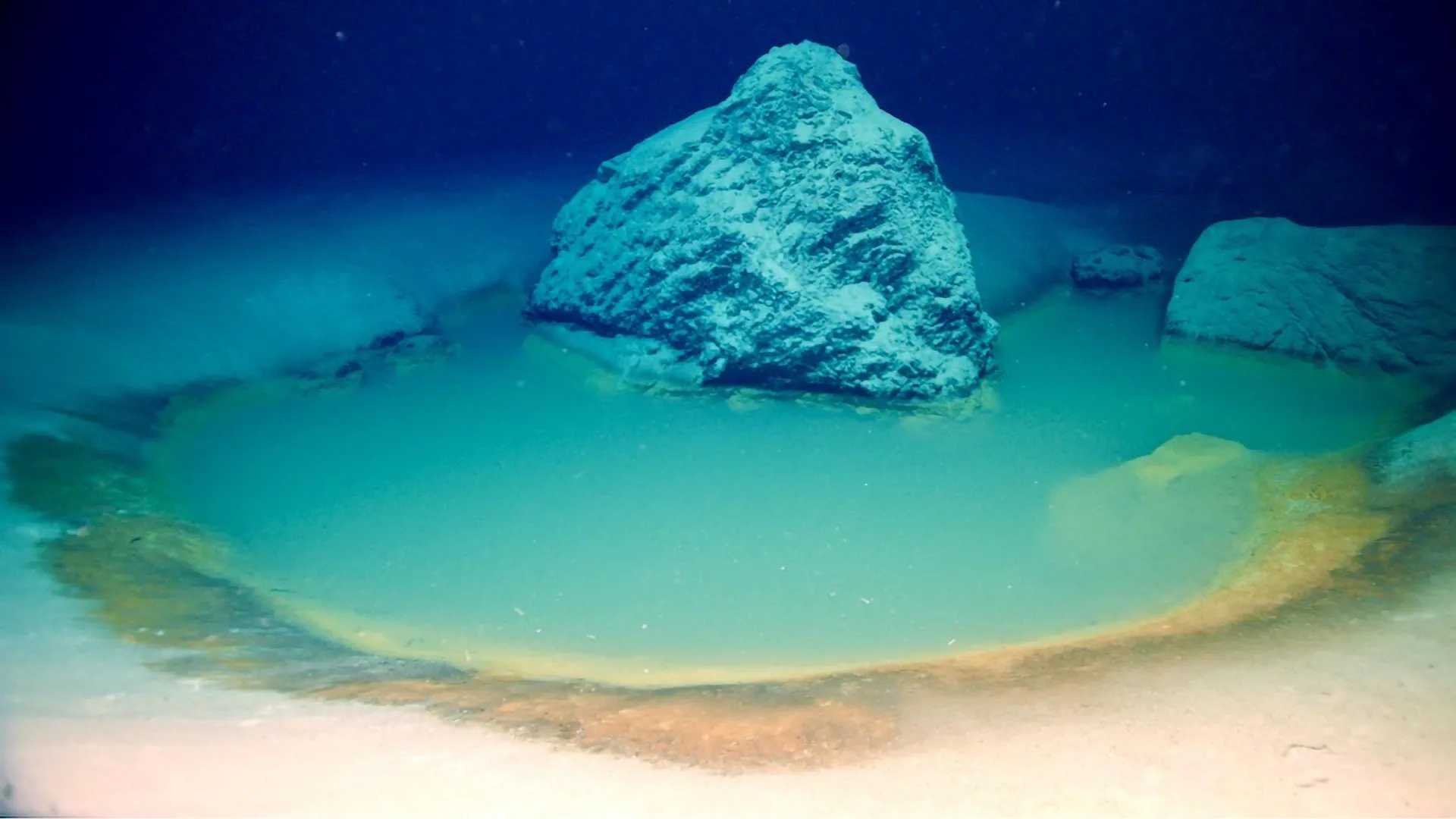
Researchers from the University of Miami’s Rosenstiel School, collaborating with OceanX, located previously unknown brine pools at depths exceeding one mile (1,770 meters) in the Gulf of Aqaba using a remotely operated underwater vehicle. The discovery represents the first documented occurrence of such formations in this region and was made during the final moments of a ten-hour research dive.
The brine pools represent some of Earth’s most extreme environments, characterized by exceptionally high salt concentrations, unusual chemical conditions, and complete oxygen depletion. Despite these harsh characteristics, the pools support abundant microbial communities. Prior research on Red Sea brine pool microbes has identified potentially significant biological compounds, including molecules showing promise for anticancer applications. The findings provide evidence that life can adapt to conditions that appear inhospitable, offering parallels for understanding potential extraterrestrial life forms.
Beyond their biological interest, the pools function as natural geological records. Their unusual chemistry and anoxic conditions preserve evidence of historical seismic and hydrological events affecting the Gulf of Aqaba region. Earlier research by the same team identified traces of a substantial underwater landslide from approximately 500 years ago that likely triggered a major tsunami. Such historical knowledge has potential relevance for coastal planning in neighboring countries, particularly regarding natural hazard preparedness.
The research expedition received funding from NEOM, a Saudi Arabian coastal development company. The study involved an international team of scientists spanning institutions in the United States, Saudi Arabia, Italy, and Germany. The findings were published in the journal Communications Earth & Environment on June 27, 2022.
Article Attribution | Read More at Article Source
Article summary produced by Claude AI