

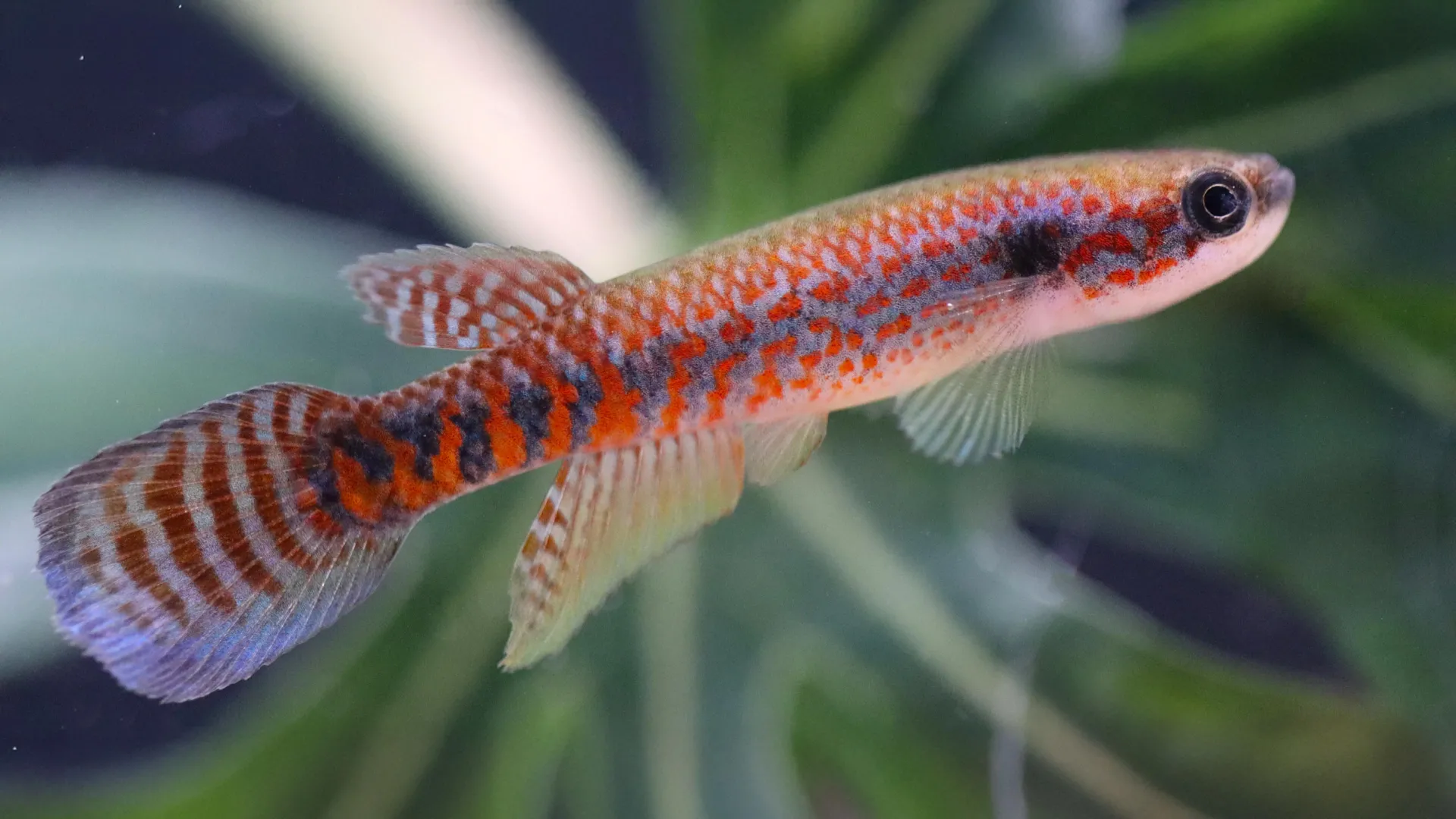
Researchers working in the Brazilian Amazon have identified a previously unknown fish species characterized by distinctive orange markings. The tiny killifish, measuring less than three centimeters, displays bright orange spots and chevron patterns on males against pale gray coloring. Named Laimosemion laranja, the species was discovered during fieldwork in the Rio Cajari drainage region in southern Amapá state in northern Brazil. The discovery resulted from collaborative research involving institutions including Universidade Federal do Rio Grande do Norte, Instituto Peixe das Nuvens, Universidade Federal do Pará, and University of West Florida.
The research team, led by Yuri Abrantes, was investigating how freshwater fish in the Rivulidae family have evolved different life cycle strategies across Brazil’s varied environments. Upon encountering the fish during surveys in local waterways, the team recognized its striking coloration as potentially representing an undocumented species. Through detailed morphological analysis—including body proportions, scale counts, and skeletal features—and mitochondrial DNA testing, scientists confirmed the fish’s distinct status. The naming choice reflects both the fish’s prominent coloration and its geographic origin, with laranja referencing both the orange color and the municipality of Laranjal do Jari where it was found.
Scientists consider Laimosemion laranja particularly significant because it represents one of five independent evolutionary origins of the annual life cycle within its family, expanding understanding of killifish diversity and evolution in the region. Some members of this group possess unusual adaptations allowing their embryos to enter dormancy in dried mud and resume development when seasonal rains return.
Despite the scientific significance, the species faces substantial conservation challenges. Researchers have located the fish in only three small forest pools, all exhibiting environmental disturbance. Deforestation, mining operations, and urban development threaten surrounding habitats, with one pool affected by sediment discoloration from mining and another located within city boundaries facing plastic pollution. The species’ known range covers approximately 25 square kilometers, meeting criteria for classification as Endangered under International Union for Conservation of Nature guidelines. Researchers have recommended expanding the adjacent Rio Cajari Extractive Reserve to protect areas where the fish resides. The study was published in the open access journal Zoosystematics and Evolution.
Article Attribution | Read More at Article Source
Article summary produced by Claude AI