

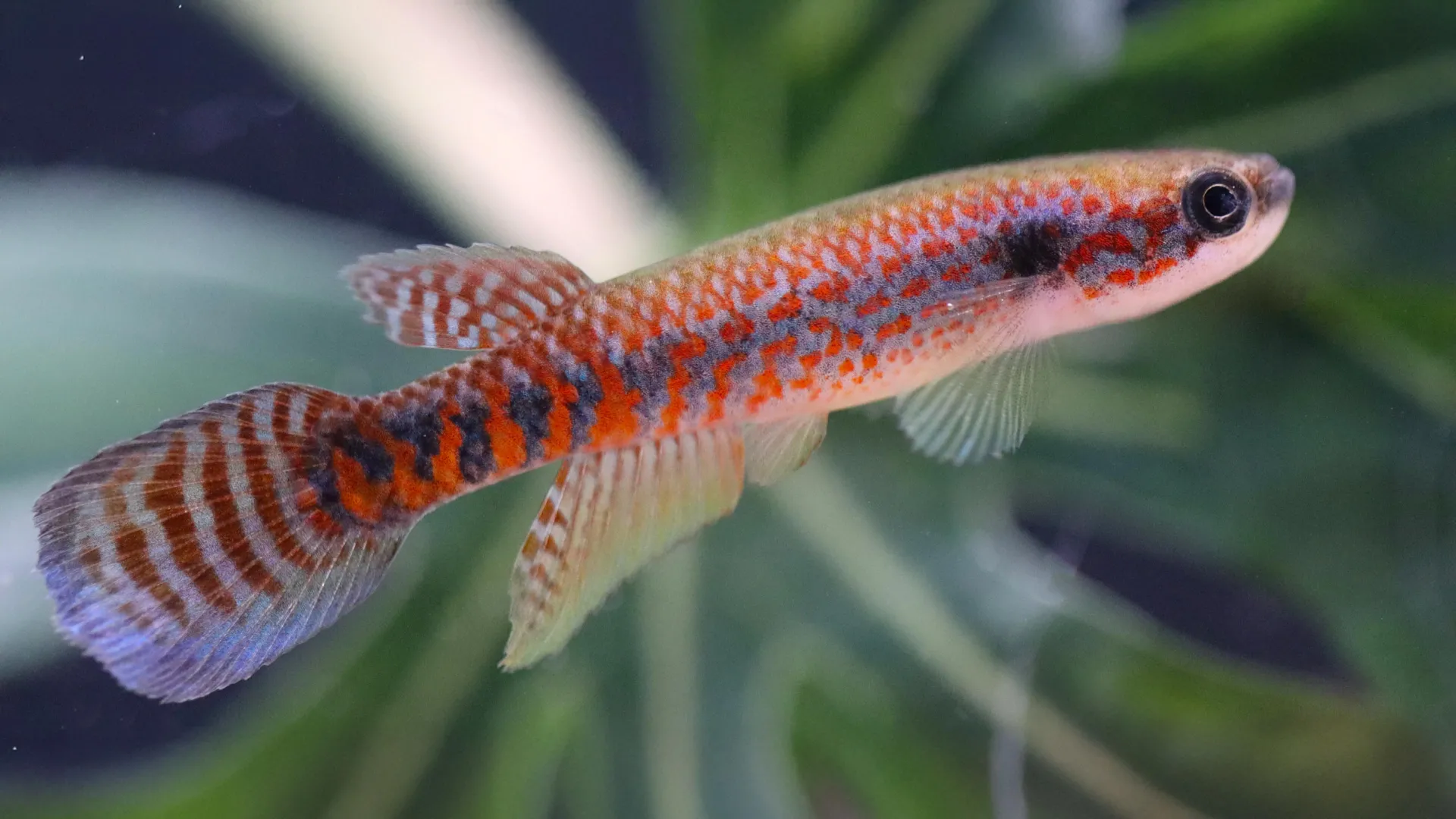
Researchers have identified a previously unknown fish species in the Brazilian Amazon rainforest. Named Laimosemion laranja, the fish measures less than three centimeters in length and displays distinctive coloration, with males featuring bright orange spots along their front bodies and bold orange chevron patterns near the tail against pale gray sides.
The discovery occurred during fieldwork in the Rio Cajari drainage in southern Amapá state, conducted by a research team from multiple Brazilian universities and the University of West Florida. The scientists were investigating how freshwater fish in the Rivulidae family have evolved different life-history strategies across Brazil’s varied environments. The fish’s unusual appearance initially drew attention, but the team conducted thorough analysis, including examination of body proportions, scale counts, skeletal features, and mitochondrial DNA testing to confirm it represented a distinct species previously unknown to science.
The name Laimosemion laranja reflects both the fish’s striking orange coloration and the region where it was found, with laranja meaning orange in Portuguese and also referencing Laranjal do Jari, the municipality where the species was discovered. The finding is scientifically significant as Laimosemion represents one of five independent origins of an annual life cycle within the Rivulidae family, a survival adaptation some members of this group have developed to endure periodic habitat drying.
Despite the scientific importance of the discovery, researchers express concern about the species’ future. The fish has been documented in only three small forest pools, all showing signs of environmental disturbance. The known habitat faces multiple pressures including deforestation, mining operations, and urban development, with some pools affected by sediment discoloration from mining and plastic pollution. With an estimated total known range of just 25 square kilometers, scientists determined the species meets criteria for classification as Endangered under International Union for Conservation of Nature guidelines. The research team has recommended expanding the nearby Rio Cajari Extractive Reserve to protect the fish’s habitat. The study was published in the open access journal Zoosystematics and Evolution.
Article Attribution | Read More at Article Source
Article summary produced by Claude AI