

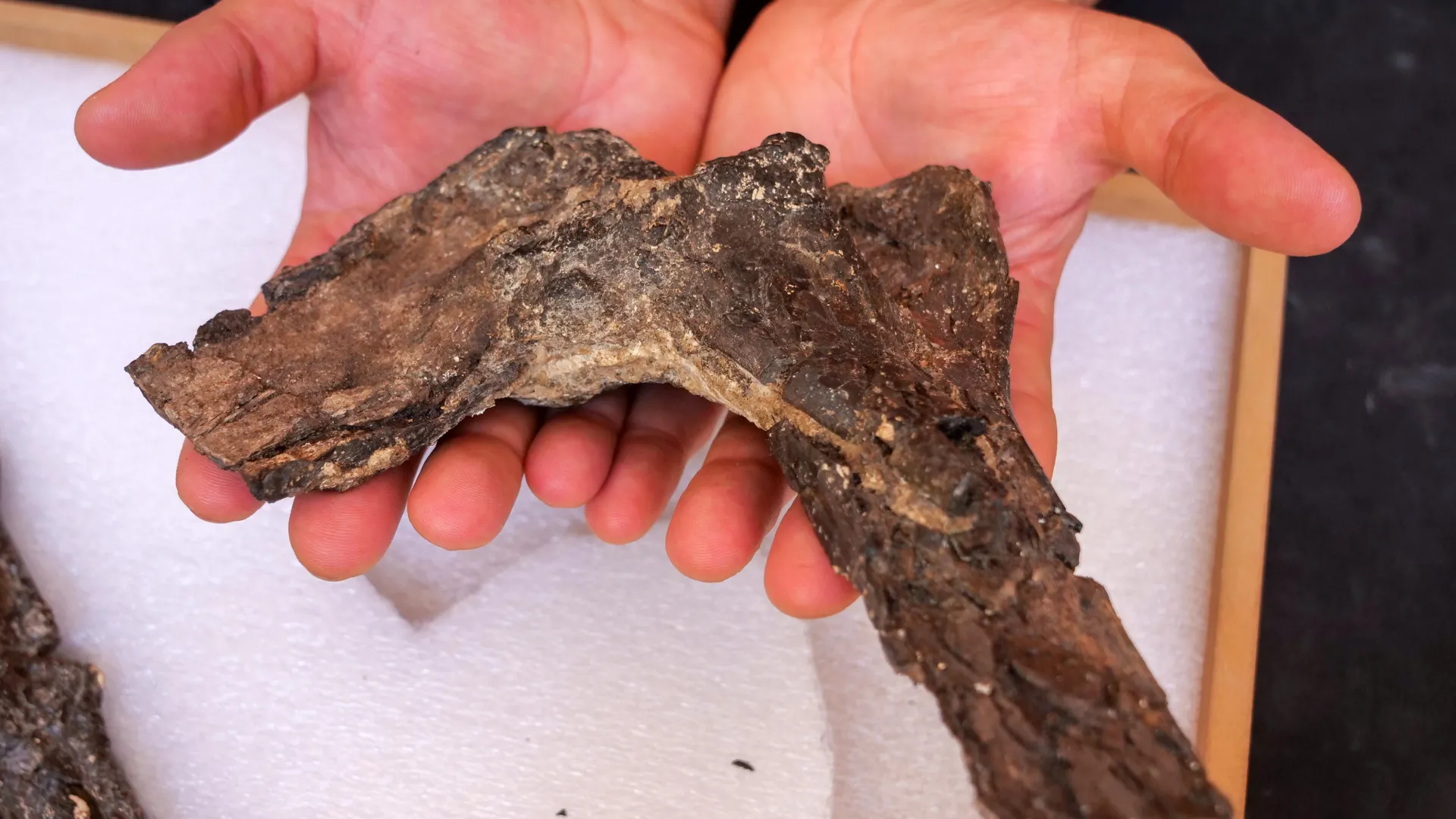
An international research team led by Curtin University announced the discovery of fossilized red blood cells and chemical evidence of blood molecules within bones of Aratasaurus museunacionali, a theropod dinosaur excavated in northeastern Brazil. The findings were published in the Proceedings of the National Academy of Sciences and represent the first definitive chemical confirmation of hemoglobin-derived molecules preserved inside fossilized dinosaur red blood cells. Previous research had identified structures resembling blood cells in ancient fossils, but researchers had not previously confirmed the presence of specific molecular remnants from hemoglobin within them.
Upon examination of the dinosaur’s limb bones, researchers identified numerous mineralized red blood cells located within vascular canals—the small passages that historically contained blood vessels. Chemical analysis detected preserved heme molecules, which function as components of hemoglobin and enable red blood cells to transport oxygen. The presence of these molecules provided direct chemical evidence supporting the fossil’s ancient blood content and demonstrated that certain biological materials previously considered too fragile to endure for millions of years can remain detectable when conditions are exceptionally favorable.
The remarkable preservation appears linked to hausmannite, a mineral that stabilized the fossilized blood cells and protected their molecular components over extensive geological periods. Researchers suspect that rapid sediment burial in an oxygen-poor environment with substantial microbial activity following the dinosaur’s death contributed to the exceptional preservation. The research effort involved scientists from multiple institutions across continents, including Curtin University’s School of Earth and Planetary Sciences, the Japan Agency for Marine-Earth Science and Technology, the Brazilian National Museum, the Regional University of Cariri, and Johns Hopkins University.
The discovery challenges longstanding paleontological assumptions that blood-related molecules, particularly those derived from hemoglobin, cannot persist across such vast time periods. Researchers suggest the findings may indicate that other fossils contain molecular information overlooked by conventional examination methods. The implications extend beyond paleontology to astrobiology; understanding how fragile biological structures survive millions of years could influence how scientists search for evidence of ancient life in extreme environments, potentially including locations beyond Earth.
Article Attribution | Read More at Article Source
Article summary produced by Claude AI