

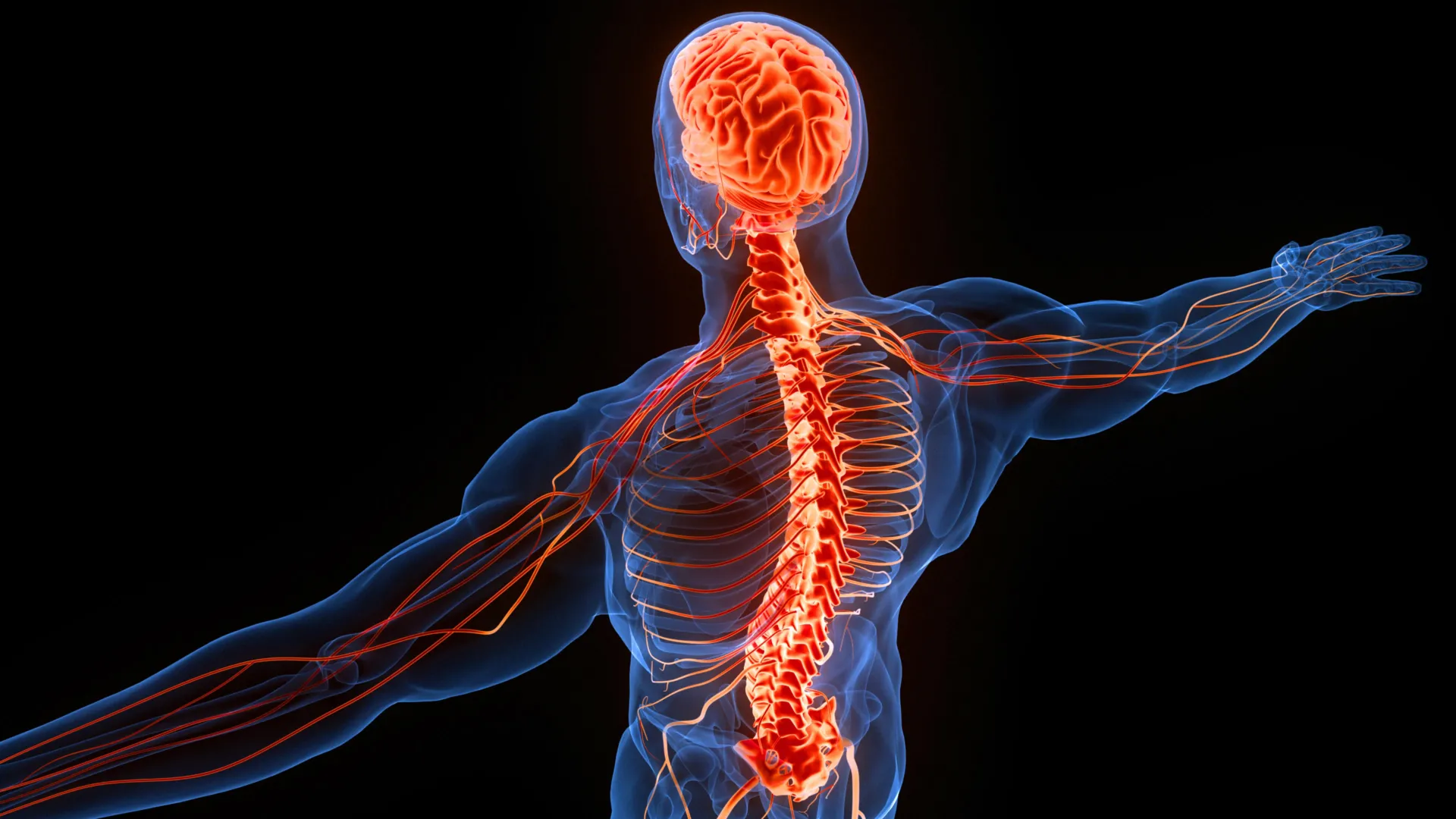
Researchers at the University of Minnesota have put forth a new hypothesis regarding one of neuroscience’s most enduring puzzles: why neural pathways cross from one side of the brain to the opposite side of the body. The study, published in Frontiers in Neuroanatomy, examined multiple neural circuits in tetrapods—animals with four limbs—to trace the evolutionary origins of these contralateral connections.
The researchers propose that the brain’s crossed organization may have developed around an ancient visual system. The explanation begins with how eyes process images: light passing through the lens creates a reversed projection on the retina, so objects appearing on the right enter through the left side of the retina. This visual information travels through the optic nerve to the optic chiasm, where fibers are organized so the right visual field reaches the left brain hemisphere and vice versa. These signals reach the optic tectum, an ancient midbrain structure found in all vertebrates that helps generate rapid reactions to visual stimuli.
Beyond vision, the researchers examined two major sensory pathways that cross the central nervous system and appear widespread among tetrapods. The dorsal column pathway transmits information about touch, vibration, and body position and is found in amphibians, reptiles, birds, and mammals, though not in fish. The spinothalamic tract carries pain and itch signals and crosses within the spinal cord itself; this arrangement appears in birds, mammals, reptiles, and some cartilaginous fish, suggesting particularly deep evolutionary origins.
The crossed organization also extends to movement control. Three pathways link one side of the brain to opposite-side spinal cord regions: the tectospinal pathway enables rapid environmental responses, the rubrospinal pathway assists limb control, and the corticospinal tract supports precise finger movements in humans. The corticospinal pathway’s evolutionary history is more complex, as only mammals possess the six-layered cerebral cortex from which it originates, though its function varies across animal species.
Article Attribution | Read More at Article Source
Article summary produced by Claude AI