

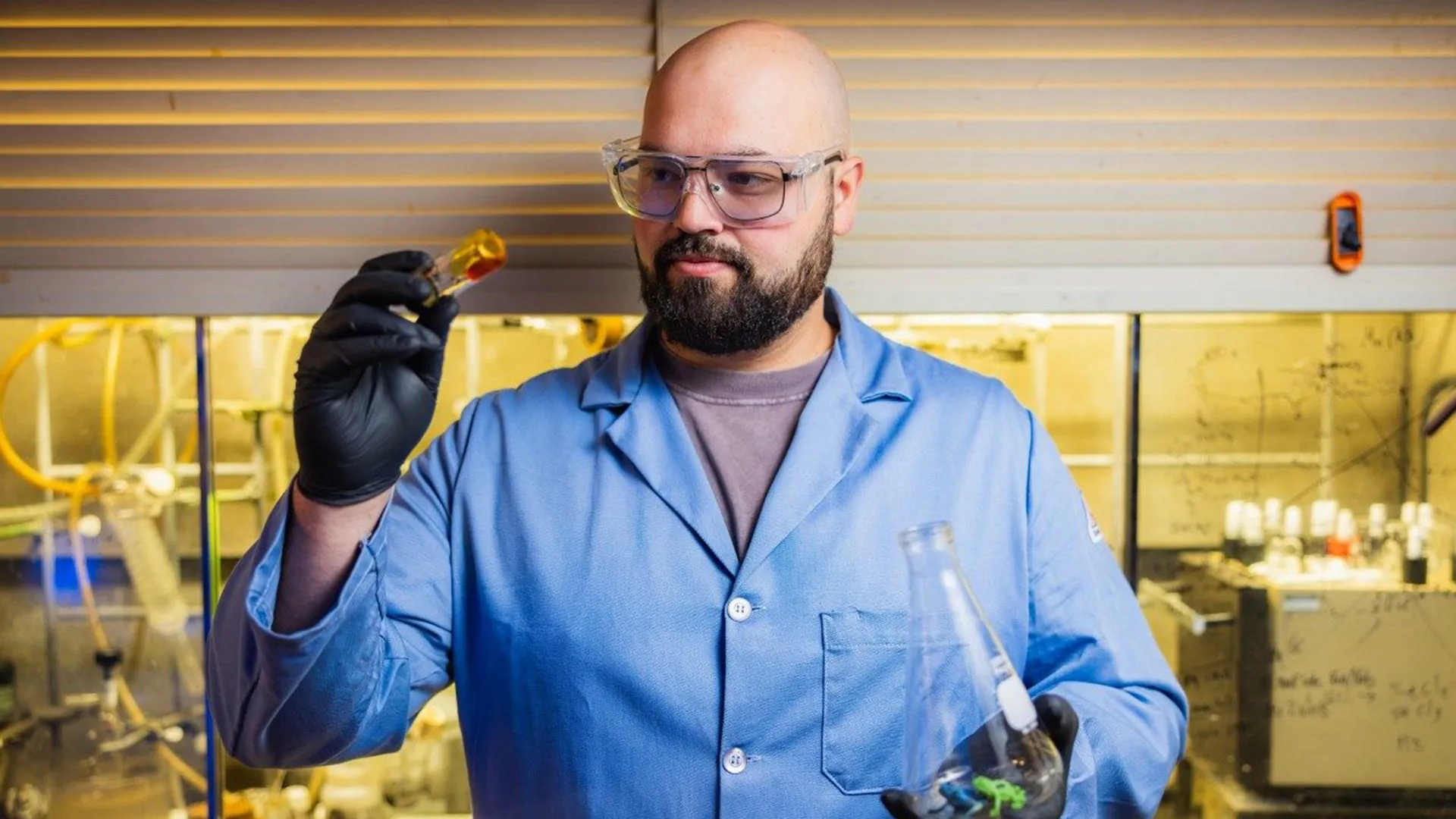
Scientists at Virginia Tech have unveiled a chemical process capable of transforming polyvinyl chloride into polyalphaolefin, a synthetic lubricant base oil. The research, led by chemist Guoliang Liu and published in Nature, presents a potential approach to managing two environmental concerns: the disposal of difficult-to-recycle plastic waste and the sustainable production of industrial lubricants.
PVC represents a particularly challenging recycling problem due to its chlorine content and the numerous chemical additives manufacturers incorporate to achieve desired properties such as flexibility or heat resistance. These formulations render conventional recycling methods ineffective, resulting in substantial quantities of discarded PVC accumulating in landfills worldwide. Meanwhile, global demand for lubricants continues to increase, with their production typically carrying considerable environmental costs.
The Virginia Tech team’s methodology involves dissolving PVC commonly found in plumbing pipes, window frames, and credit cards in a solvent. They then introduce aluminum trichloride and alpha-olefins, heating the mixture to 158 degrees Fahrenheit for three hours to produce a viscous lubricating oil. The resulting polyalphaolefin belongs to a family of synthetic base oils prized for their thermal stability and performance across varied temperature ranges, making them suitable for high-performance engine oils.
The breakthrough emerged from Liu’s earlier work demonstrating the conversion of other plastic waste types into surfactants used in soaps and detergents. Building on those successes, Liu assembled a research team including graduate students to address PVC recycling challenges. Rather than attempting to modify the polymer’s molecular chains directly, Liu’s team discovered that fragmenting the chains into smaller segments yielded more promising results.
To assess the commercial viability of the process, Liu collaborated with researchers at Texas A&M University, Caltech, and within Virginia Tech to evaluate lubricant performance, conduct chemical analysis, and develop scaling models. While the research confirms that waste PVC can serve as a feedstock for synthetic lubricant production, Liu acknowledges that expanding the technology beyond laboratory conditions remains a critical objective for future work.
Article Attribution | Read More at Article Source
Article summary produced by Claude AI