

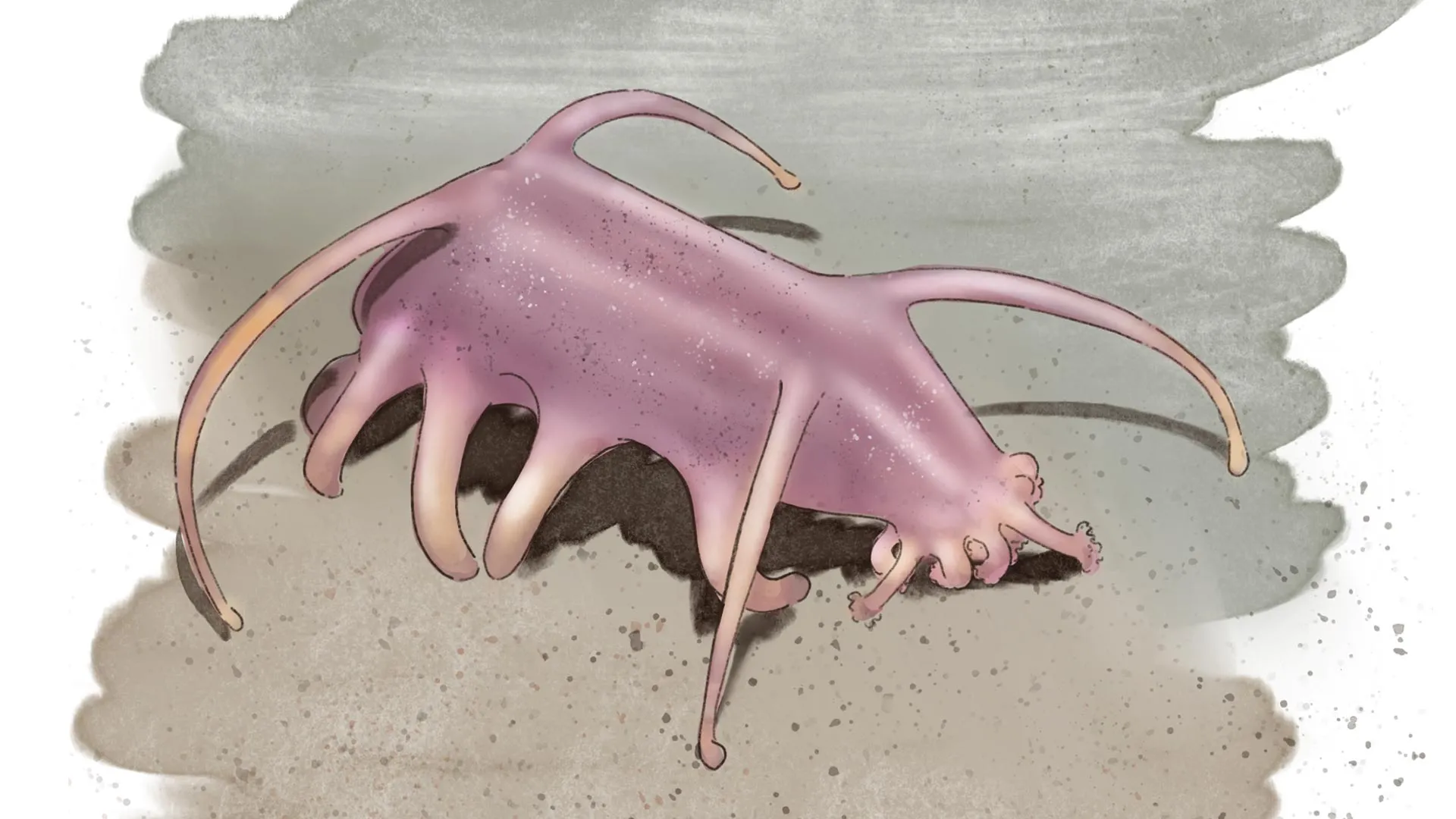
Scientists from Japanese institutions, led by researchers at the University of Tokyo, have identified a novel bacterium inhabiting the body walls of deep-sea sea pigs. The bacterium, designated Candidatus Abyssoplasma scotoplanesicola, represents a new genus and species within a group of microorganisms known to associate closely with marine invertebrates. The discovery emerged from an examination of eight sea pig specimens collected during deep-sea research expeditions. Using genetic sequencing and fluorescence imaging techniques, the researchers determined that this bacterium dominated the body-wall tissues of multiple sea pig species, accounting for more than 70 percent of bacterial genetic markers in sampled animals.
The most striking characteristic of the newly identified bacterium is its genetic structure. Its genome contains only 649,000 DNA bases, making it approximately seven times smaller than that of E. coli, a commonly studied intestinal bacterium. Despite this compact size, the bacterium’s genetic composition reveals an unusual allocation of resources. Approximately 27.6 percent of its entire genome consists of genes encoding surface-associated proteins, including some proteins containing more than 5,000 amino acids. This length is extraordinary, as typical bacterial proteins average around 300 amino acids. The bacterium also appears to lack genes involved in certain energy-generating pathways that are normally present in independently living bacteria.
These findings provide insight into how bacteria adapt to symbiotic relationships with host organisms. The presence of oversized surface proteins suggests specialized capabilities for interacting with sea pig tissues or for facilitating bacterial clustering, though their precise functions remain undetermined. The loss of genes for independent energy production indicates the bacterium has become increasingly reliant on its host for survival. This research carries ecological significance, as sea cucumbers, the group to which sea pigs belong, comprise over 90 percent of the biomass of large seafloor animals in certain deep-ocean environments. The study contributes to broader scientific understanding of host-microorganism interactions and microbial adaptation in extreme marine settings.
Article Attribution | Read More at Article Source
Article summary produced by Claude AI