

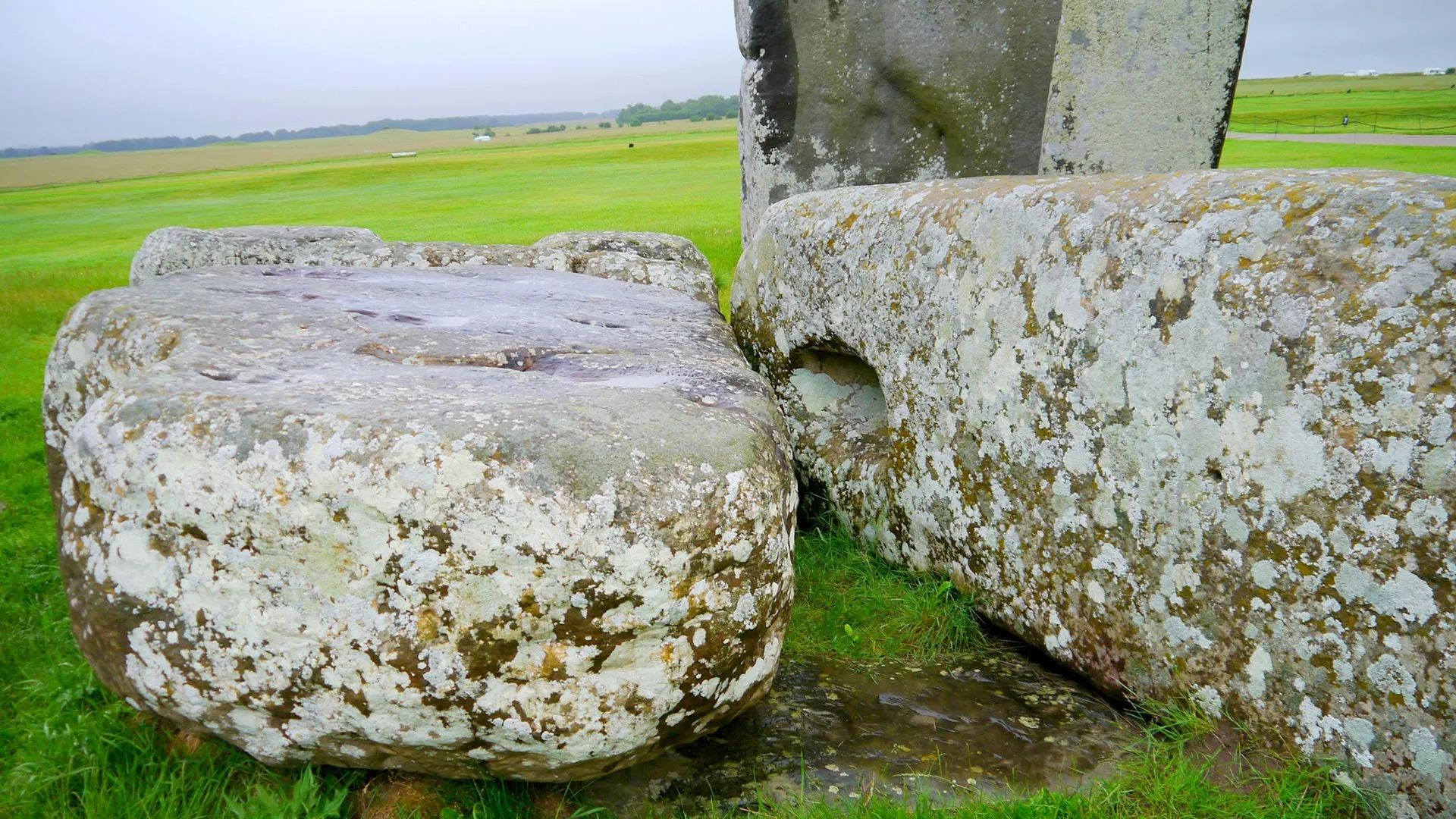
Researchers have conducted the most extensive geological examination to date of the Altar Stone, a 4.9-meter sandstone slab that sits at the center of Stonehenge on Salisbury Plain in southern England. Using advanced analytical techniques including physical structure analysis, mineral content examination, chemical composition study, and isotopic signature testing, the international team has developed a distinctive geological fingerprint for the stone that can be compared against rock formations across Britain.
For more than a century, archaeologists and geologists believed the stone originated in Wales. This theory was later challenged by research identifying northeastern Scotland, particularly the Orcadian Basin, as a more probable source. The latest investigation builds on those findings by establishing more precise geological criteria, though the stone’s exact birthplace remains undetermined. The study has successfully eliminated several candidate locations but has not yet identified a perfect match among the areas examined.
The research involved specialists from multiple countries and institutions, including universities in the United Kingdom, Canada, Italy, and Sweden. According to the leading researchers, while the findings have not pinpointed the stone’s origin, they represent significant progress in narrowing the search and have equipped future investigations with clearer targets. The researchers emphasize that eliminating possible source areas is as valuable as identifying new candidates in this geological investigation.
Determining where the Altar Stone originated could provide crucial insights into prehistoric engineering and transportation capabilities. Stonehenge was constructed in multiple stages between approximately 3000 and 1600 BC, with builders known to have moved enormous stones considerable distances. If the Altar Stone came from northeastern Scotland, its journey to Salisbury Plain would have been substantially longer than that of other transported stones, potentially revealing important information about the organizational and technical abilities of the monument’s builders.
Article Attribution | Read More at Article Source
Article summary produced by Claude AI