

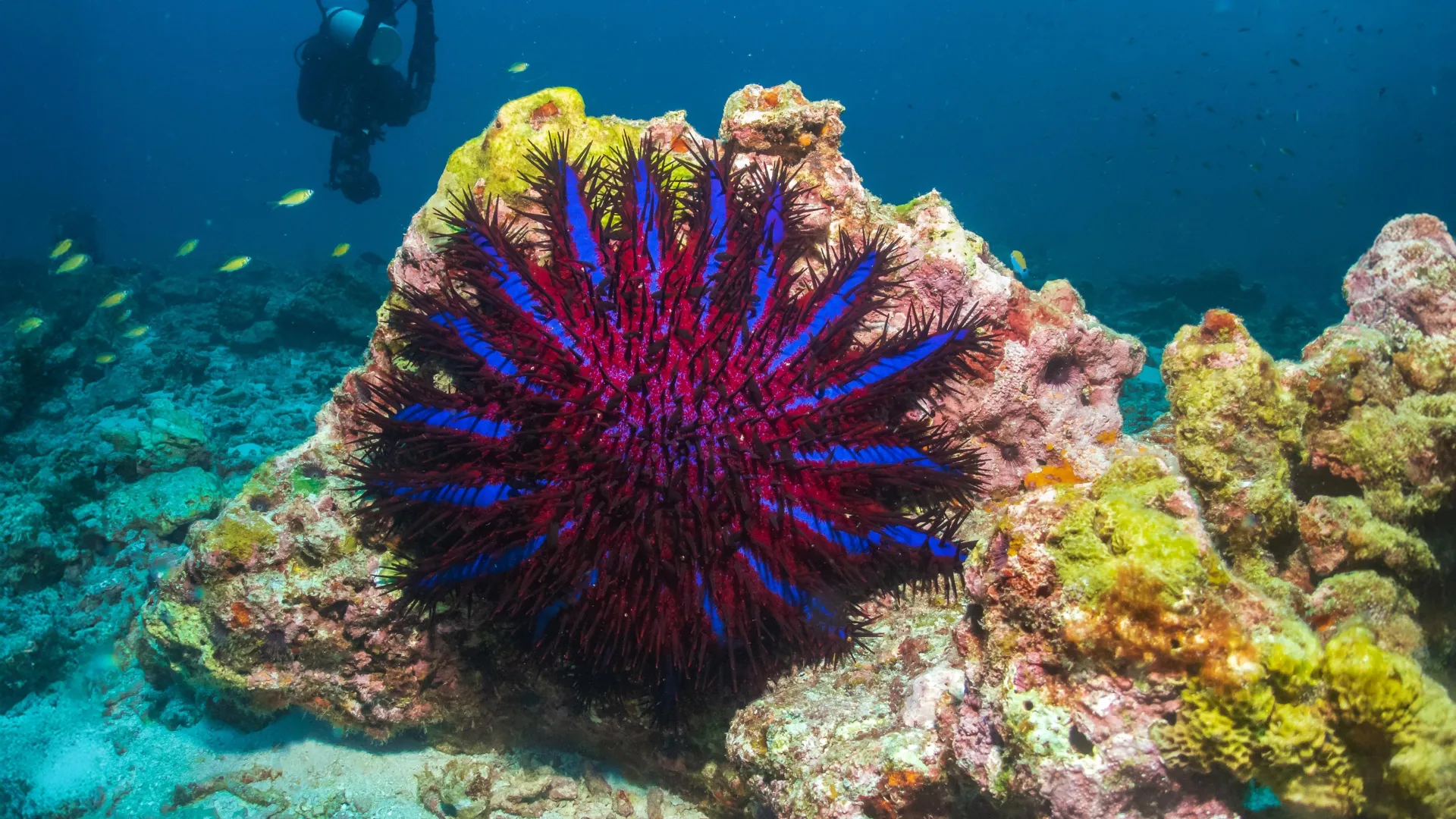
Crown-of-thorns starfish have long been identified as major threats to coral reef ecosystems, particularly the Great Barrier Reef, where their population explosions have caused significant damage. Since the 1960s, the reef has experienced four major outbreaks, with declining natural predator populations contributing to their destructive impact. However, new research from the University of Sydney published in Ecology and Evolution reveals a more nuanced role for these organisms when their numbers stay within natural limits.
A study conducted at One Tree Island Research Station on the Great Barrier Reef examined how coral responds to starfish feeding. Researchers led by Dr. Shawna Foo analyzed feeding scars and remaining tissue at protected study sites where healthy fish populations keep starfish numbers under control. The findings showed that coral tissue survived approximately 75 percent of observed feeding events, with starfish consuming moderate amounts of coral before moving on rather than destroying entire colonies.
The research indicates that smaller starfish populations may actively support reef biodiversity by selectively feeding on fast-growing coral species like Acropora. By reducing the dominance of these rapidly spreading corals, the starfish create space for slower-growing varieties such as Montipora and Porites to establish themselves. This feeding pattern aligns with the intermediate disturbance hypothesis, an ecological principle suggesting that moderate, occasional disruptions can prevent ecosystem dominance by any single species and maintain overall diversity.
Scientists caution that the benefits identified apply specifically to controlled starfish populations and do not diminish the threat posed by major outbreaks. The distinction lies in whether starfish numbers remain at naturally manageable levels or surge dramatically. Researchers suggest that conservation strategies should focus on managing outbreaks while recognizing that complete elimination of starfish may not represent the optimal ecological endpoint. Instead, efforts should emphasize protecting natural starfish predators and maintaining marine management practices that keep populations in balance.
Article Attribution | Read More at Article Source
Article summary produced by Claude AI