

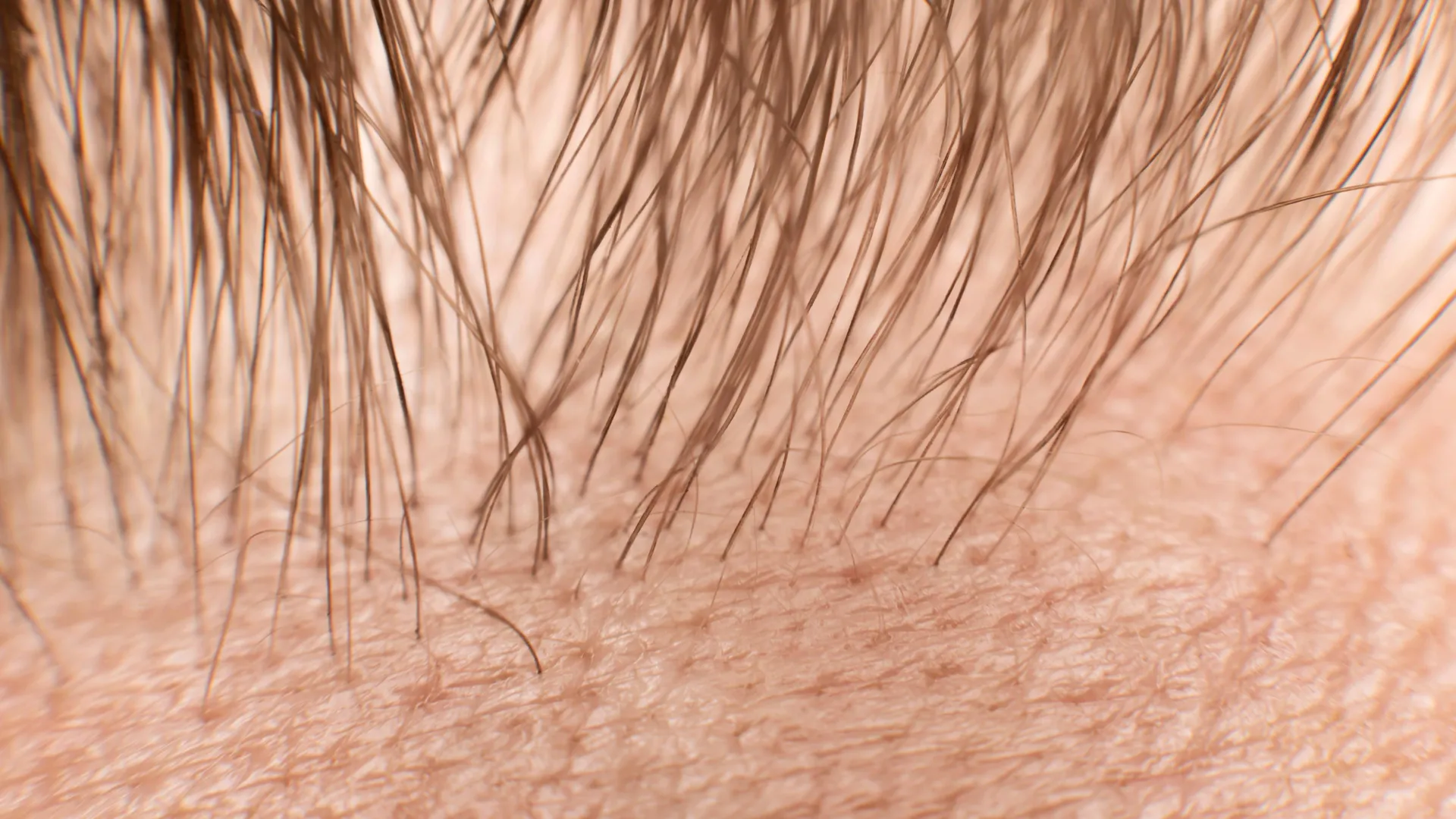
Scientists at the University of Geneva have proposed a new explanation for how mammalian hair follicle patterns form during fetal development. Rather than relying on complex genetic instructions, the research suggests that a relatively straightforward process involving cell movement and chemical signals may drive the precise positioning of hair follicles across the skin.
Traditional scientific thinking has attributed follicle patterning to what researchers call the expansion-induction model. This theory proposes that developing follicles release chemicals that inhibit new follicles from forming nearby, and as the embryonic skin stretches during growth, new follicles eventually develop in areas that have moved far enough away from existing ones. However, scientists have struggled to demonstrate experimentally that this mechanism can account for the different follicle patterns observed across various animal species.
The Geneva research team, led by Athanasia Tzika and Michel Milinkovitch, investigated an alternative mechanism called chemotaxis, in which cells move in response to chemical concentration gradients. The researchers created mathematical simulations that modeled how skin cells in the deeper layer respond to chemical signals from the outer skin layer. Surprisingly, these simulations successfully reproduced the follicle patterns observed in laboratory mice, including the sequence of development previously explained through the more complex expansion-induction theory.
To test whether this simpler mechanism could explain variation across species, the team studied the spiny mouse, which displays a distinctly different coat structure with highly organized, directionally-aligned follicles. Using experimental data from three-dimensional imaging of developing embryonic skin, researchers adapted their simulations to match the spiny mouse’s specific biochemical properties and growth patterns. The model again successfully recreated the observed follicle arrangement, suggesting that the same underlying process operates across different mammalian species.
The findings, published in PNAS, propose that the remarkable diversity of hair, feather, and scale patterns throughout the animal kingdom may arise from a shared set of basic biological rules. Rather than requiring entirely different developmental blueprints for each species, variations in how cells interact with chemical signals could account for the structural differences observed in nature.
Article Attribution | Read More at Article Source
Article summary produced by Claude AI