

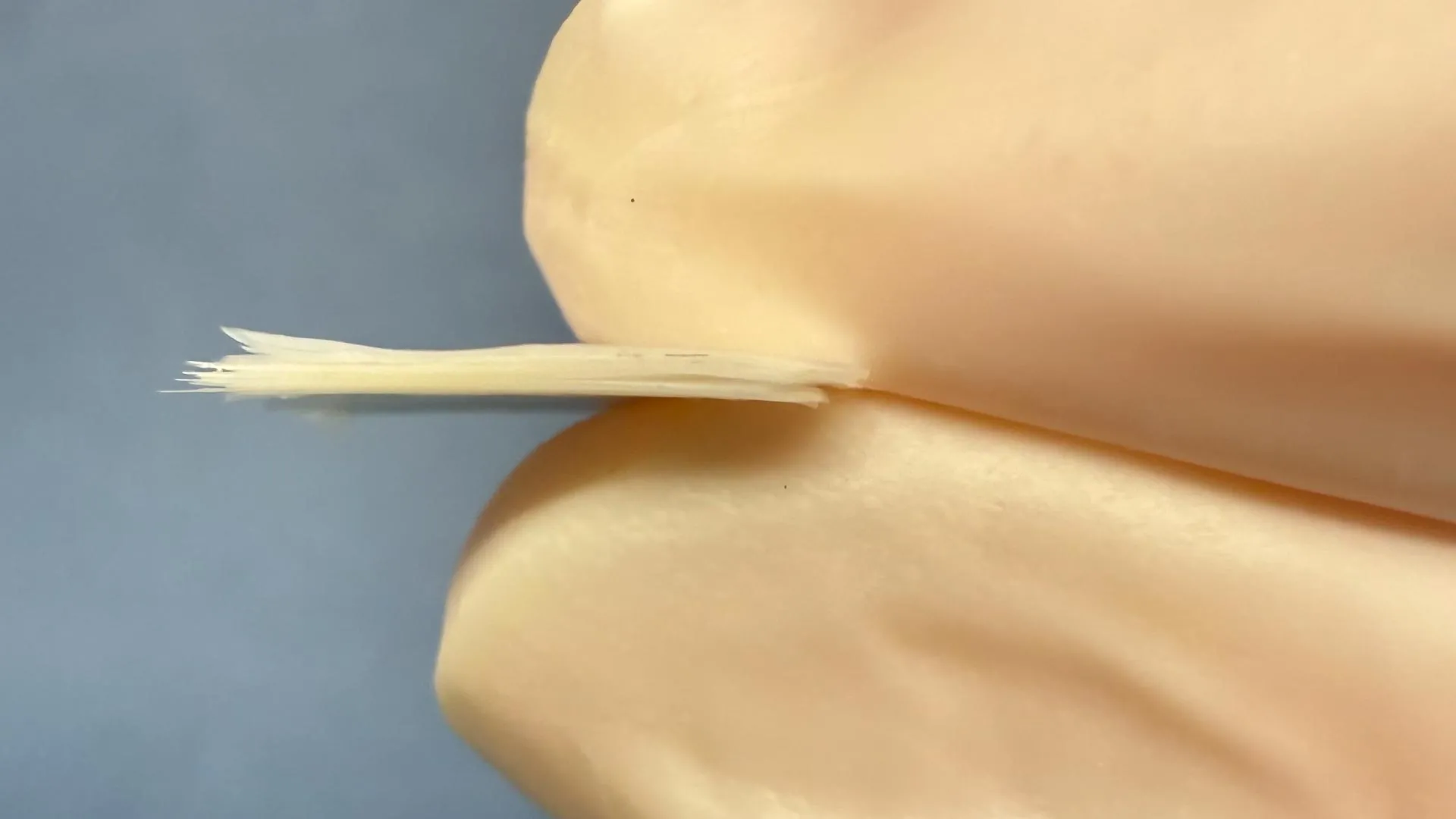
Researchers at the University of Pennsylvania have identified Mylar, a common plastic material found in emergency blankets and food packaging, as a potential solution for insulating lunar habitats and equipment. The team developed a material called hybrid layered insulating film stacks (HyLIFS) by stacking hundreds of extremely thin Mylar sheets, some coated with aluminum oxide to increase rigidity. This configuration allows the material to maintain effective thermal insulation while withstanding significant physical stress, addressing a major engineering challenge for sustained lunar operations.
Designing insulation for the Moon requires balancing two competing demands. The material must prevent heat transfer through the vacuum of space while remaining durable enough to survive the stresses of transport, installation, and years of operational use. Many existing high-performance insulators, such as aerogels and multilayer insulation systems, excel at thermal performance but are fragile and vulnerable to damage. Conversely, strengthening insulators often compromises their ability to prevent heat transfer, creating an engineering dilemma for spacecraft and habitat designers.
Testing revealed that the HyLIFS material achieved impressive performance on both fronts. In vacuum conditions, the best samples matched the thermal conductivity of other advanced insulation materials while maintaining flexibility. When subjected to compression forces equivalent to approximately 200 pounds of pressure on an area the size of a fingertip, the material proved remarkably resistant. In repeated testing cycles where samples were compressed 10 times in succession, the stacks maintained their structural integrity and insulating properties throughout.
The research, published in ACS Applied Materials & Interfaces, suggests that the material could be adapted for protecting lunar habitats, spacesuits, and equipment designed for extended operation on the Moon’s surface. Senior researchers noted that the ability to pack, transport, and survive rough handling over extended periods could make the material particularly valuable for lunar infrastructure. Manufacturing HyLIFS on a large scale remains a future challenge, as current assembly requires manual construction using tweezers and careful handling of delicate films.
Article Attribution | Read More at Article Source
Article summary produced by Claude AI