

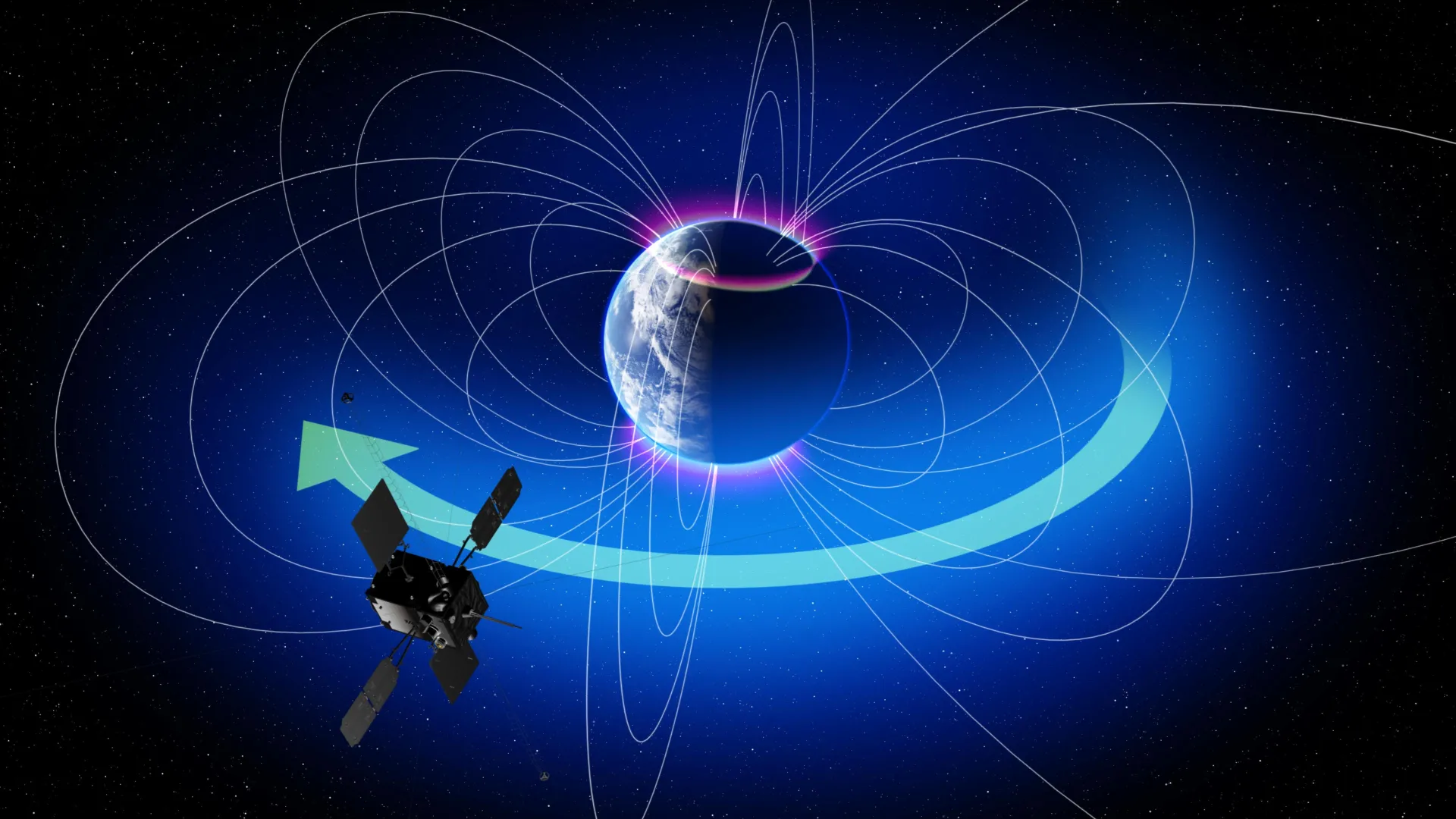
In May 2024, a powerful solar storm triggered one of the most intense geomagnetic disturbances recorded in decades, pushing the SYM-H index to −518 nanotesla. The event, which produced auroras visible across the globe, also caused a dramatic weakening of Earth’s magnetic field and raised new questions about the mechanisms driving severe space weather events.
Researchers studying the storm using data from Japan’s Arase satellite discovered an unexpected finding regarding the source of particles that comprise Earth’s ring current—a vast belt of charged particles that circles the planet thousands of kilometers above the equator. Previous scientific debate centered on whether particles from the solar wind or from Earth’s ionosphere dominated during such events. Analysis of direct measurements taken during the May 2024 storm showed that approximately 85 percent of the ions in the ring current originated from Earth’s atmosphere rather than from the incoming solar wind.
The dominance of atmospheric particles over solar wind contributions was particularly notable given that the storm itself had been triggered by dense streams of charged material arriving from the Sun. Scientists attributed the unexpected composition to the fact that ions from Earth’s ionosphere are substantially heavier than particles supplied by the solar wind. These heavier ions may have intensified the magnetic disturbance and caused the ring current to reach extreme intensity much closer to Earth than had been observed in previous comparable storms.
The Arase satellite recorded a 40 percent decrease in magnetic field intensity at approximately 16,000 kilometers altitude during the storm’s peak, occurring much nearer to Earth than similar reductions documented in previous events. The findings, published in Science Advances, suggest that Earth’s atmosphere plays a more significant role in determining the severity of extreme geomagnetic storms than previously understood. The discovery has bolstered support for a proposed Japanese satellite mission aimed at further investigating how atmospheric particles enter space and influence powerful geomagnetic storms.
Article Attribution | Read More at Article Source
Article summary produced by Claude AI