

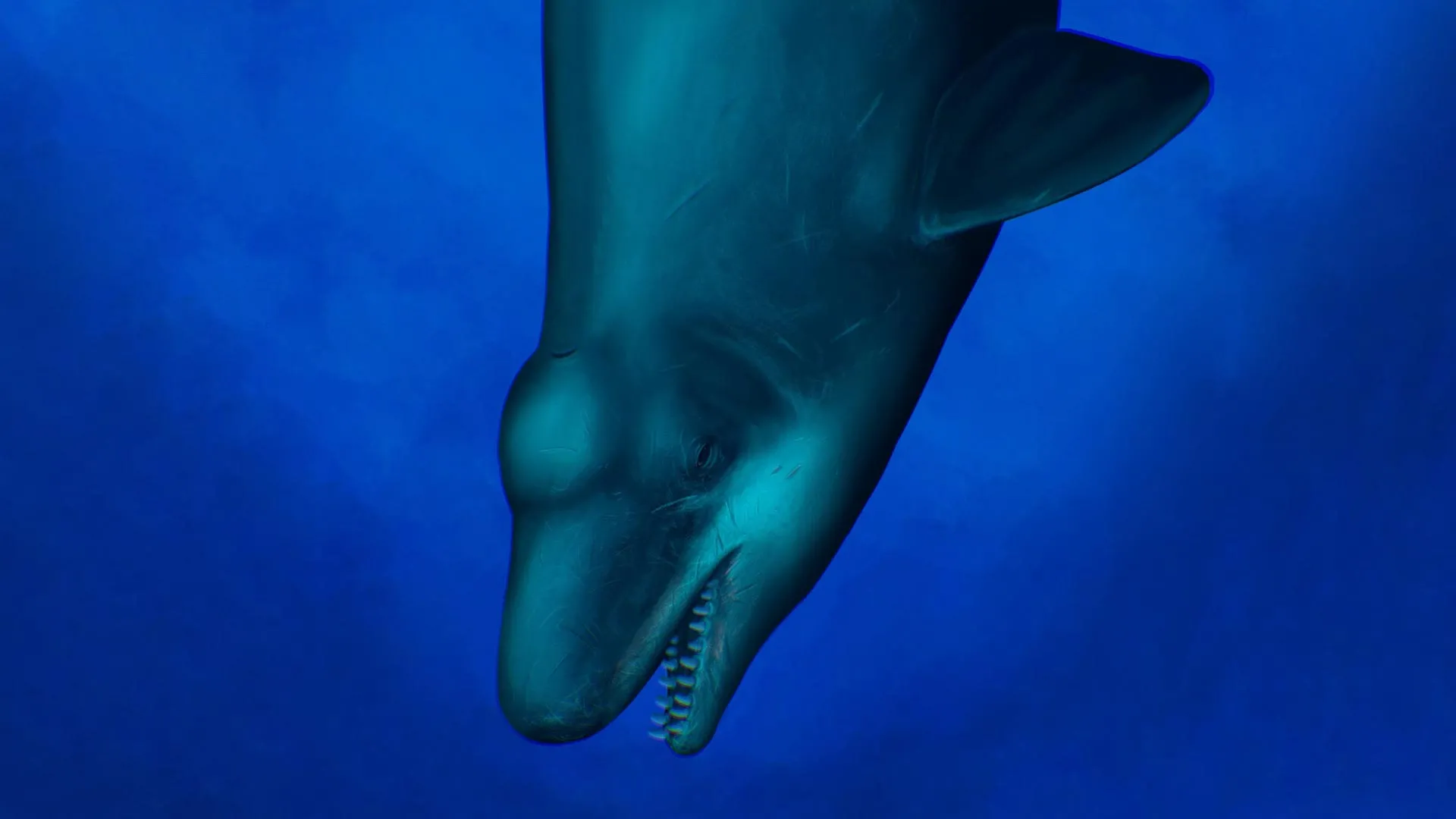
Researchers have discovered an extinct whale species that possessed one of the most remarkably asymmetrical skulls ever found in the mammalian fossil record. The specimen, named Scaphokogia huachafo and dating to the Late Miocene period between 6.3 and 5.6 million years ago, measured approximately 2.7 meters in length. The fossilized skull displays cranial features so unevenly distributed that scientists initially questioned whether geological processes had distorted the bone structure after death.
Initial investigation revealed that the asymmetry was not caused by fossilization damage or disease. The skull’s sutures remained fully closed with no fractures or pathologies present elsewhere on the bone, confirming that the extreme lopsidedness represented the whale’s natural biological anatomy. The whale’s bony nostrils were shifted entirely to the left side of its skull, while facial bones differed dramatically in size and position. The specimen was originally recovered in the mid-1990s from Peru’s Pisco Formation, a region renowned for exceptionally well-preserved marine fossils.
The unusual skull structure appears linked to the whale’s specialized feeding adaptation. The animal possessed a large, tube-shaped snout reinforced by dense bone and cartilage that angled downward at approximately 31 degrees relative to the rest of its skull. Skeletal analysis suggests the creature could bend its head downward by as much as 55 degrees, positioning its snout directly toward the seafloor. These anatomical features suggest Scaphokogia huachafo hunted in shallow coastal waters rather than pursuing prey in deep ocean environments like modern sperm whales.
Researchers believe the whale relied on a highly specialized echolocation system to locate food concealed within soft sediment along the ocean bottom. Unlike other marine mammals that forage near the seafloor using facial whiskers or specialized vision, this species lacked such adaptations and instead depended on its asymmetrical skull to support sophisticated biological sonar capabilities. This distinctive ecological strategy eventually disappeared as ocean conditions shifted during the Late Miocene, leaving no modern marine mammals employing comparable feeding techniques today.
Article Attribution | Read More at Article Source
Article summary produced by Claude AI