

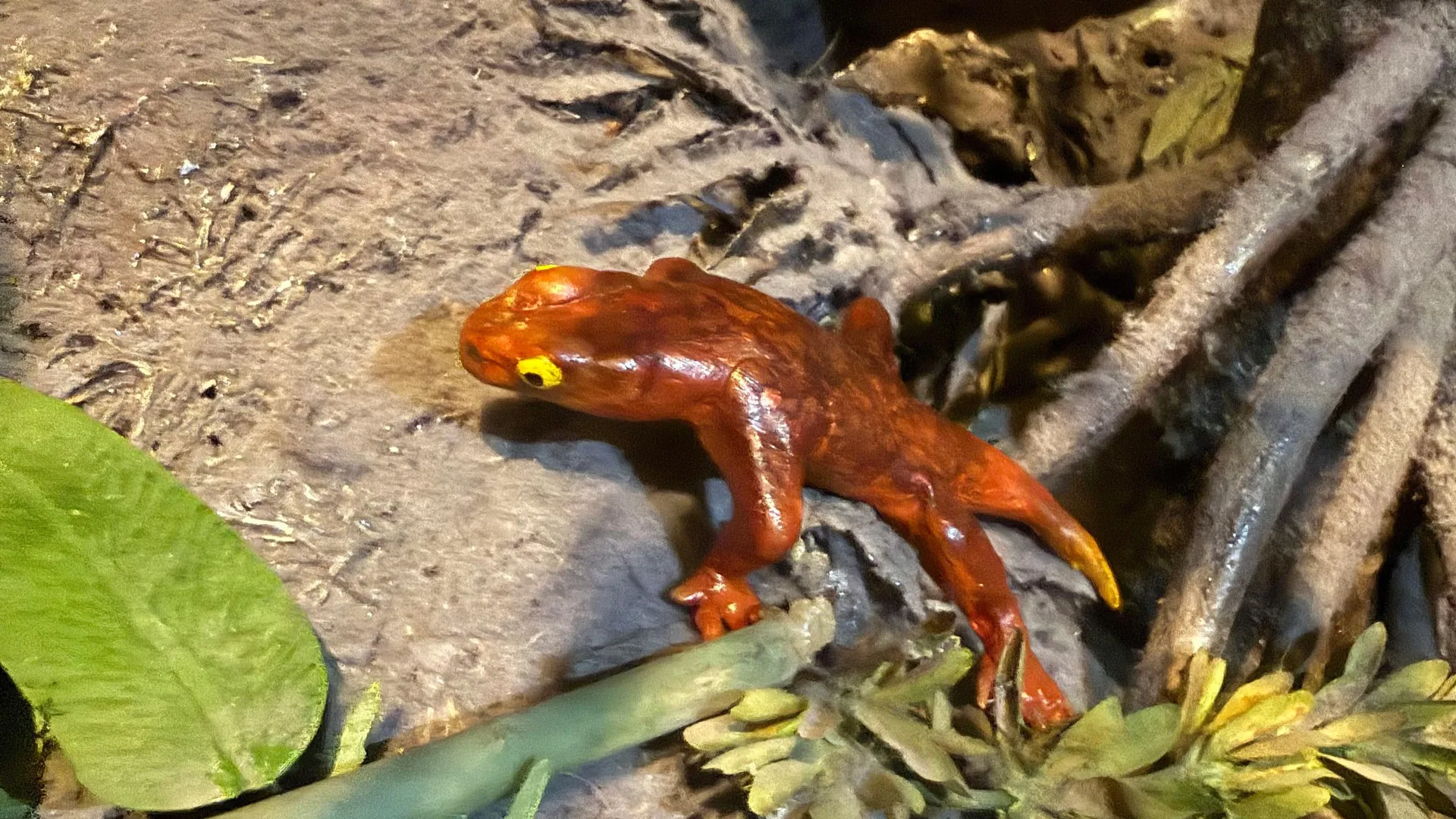
Paleontologists have formally described a newly identified species of ancient amphibian discovered in Illinois and housed at the Field Museum. The creature, designated Jeanerpeton mazonensis, lived during the Carboniferous period approximately 309 million years ago, predating the emergence of dinosaurs by hundreds of millions of years. The specimen name references Mazon Creek, where it was found, and honors the mothers of the two student scientists who played key roles in the research.
The fossil deposits at Mazon Creek represent one of the world’s most significant sources of Carboniferous-era remains, largely due to environmental conditions that facilitated exceptional preservation. When organisms died in the ancient river delta ecosystem that once characterized the region around present-day Chicago, rapid burial under sediment created conditions favorable for fossilization. This process sometimes preserved intricate anatomical features that would typically decompose before becoming permanent fossils. The Jeanerpeton specimen retained visible scales, gastralia structures, eye impressions, and other fine details that provide insights into early amphibian morphology.
The fossil had been in the Field Museum’s collection for years before its true identity was recognized. When initially examined, researchers classified the specimen as Amphibamus grandiceps, an already-documented species from the region. Subsequent detailed analysis, however, revealed sufficient anatomical distinctions to establish Jeanerpeton as a separate species. This reclassification addresses a common paleontological challenge wherein similar-appearing fossils are grouped into broad categories, sometimes obscuring the existence of distinct organisms.
The research was led by Payton Kohlberg and Allison Sefcovic, participants in the Field Museum’s Women in Science internship program, working under the guidance of postdoctoral researcher Cam So and assistant curator Arjan Mann. The findings appear in the Journal of Vertebrate Paleontology. The discovery underscores how museum collections continue yielding scientific insights long after initial specimen acquisition and illustrates the evolving nature of paleontological knowledge as analytical techniques improve and research deepens.
Article Attribution | Read More at Article Source
Article summary produced by Claude AI