

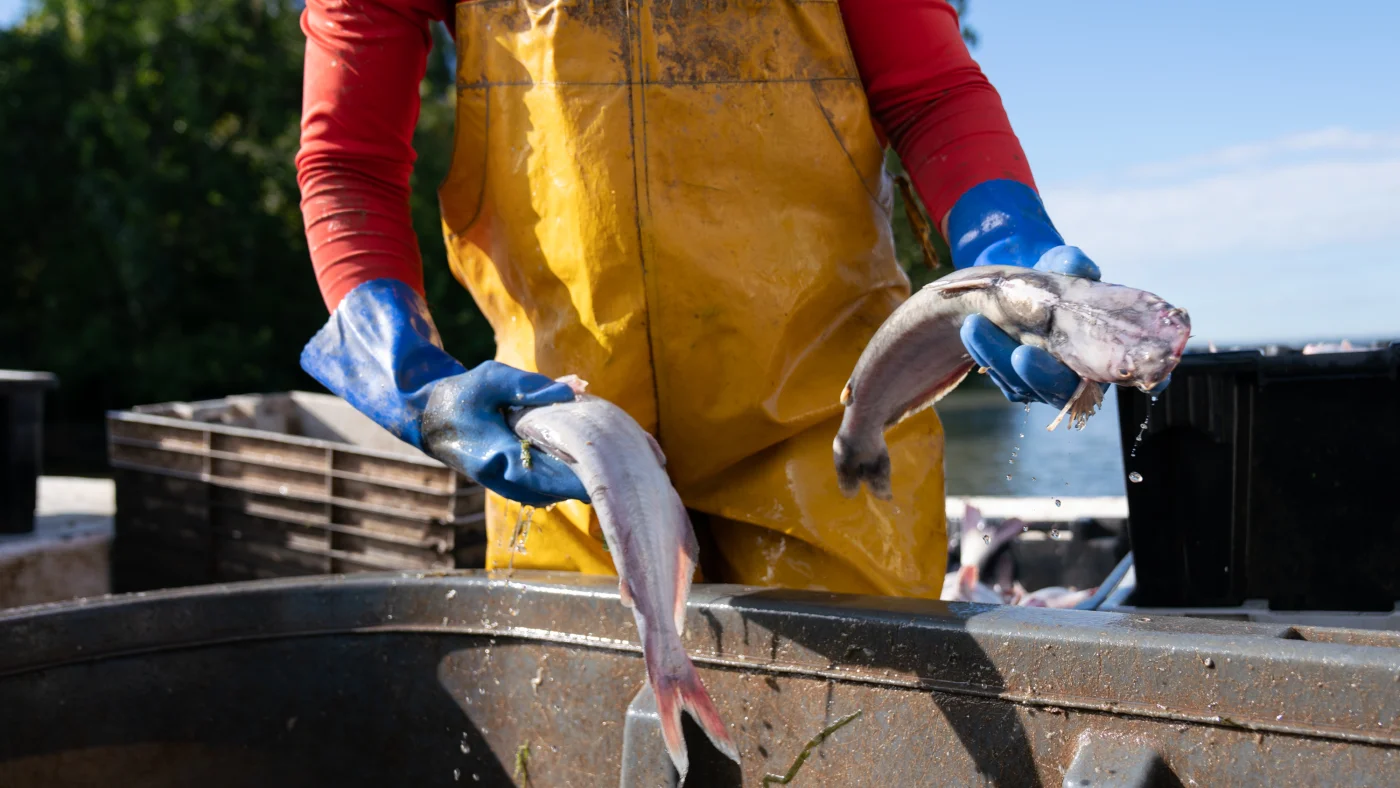
Preston Elementary School in Maryland’s Eastern Shore has incorporated blue catfish into its lunch offerings as part of a broader initiative to manage an invasive species problem. The dish, known as a “catty patty,” consists of a crabcake-like sandwich made from blue catfish meat. Students have responded positively to the offering, which is served several times per month alongside other lunch options.
The blue catfish became established in Chesapeake Bay tributaries after being introduced to Virginia rivers in the 1970s for recreational fishing. Officials initially believed the fish would remain in freshwater portions of rivers, as blue catfish are freshwater species sensitive to salinity. However, the fish demonstrated an unexpected ability to tolerate brackish water conditions. In 2018, record rainfall provided the species with expanded freshwater habitat, enabling it to spread throughout the Chesapeake Bay region. Today, blue catfish occur in every tidal tributary of Maryland and dominate fish populations in some areas, comprising roughly 70 percent of total fish biomass in certain locations.
The species poses significant ecological and economic threats to the region. As an apex predator with a voracious appetite, blue catfish consume native species including young blue crabs, menhaden, and other forage fish. This predation places additional stress on already vulnerable populations that form the foundation of Maryland’s seafood industry. The potential decline of blue crab populations would represent a substantial economic and cultural loss for the state.
School food service officials began working with state agriculture and natural resources agencies to address the problem through culinary innovation. The resulting catfish cake meets federal dietary requirements while utilizing the invasive species. Other school districts in Maryland and Virginia have since adopted similar programs through partnerships with food service initiatives. The strategy reflects a broader approach across multiple states that position humans as apex predators to control invasive species, with comparable efforts targeting Asian carp in Kentucky and Illinois, and green crabs in Maine and Washington state.
Article Attribution | Read More at Article Source
Article summary produced by Claude AI