

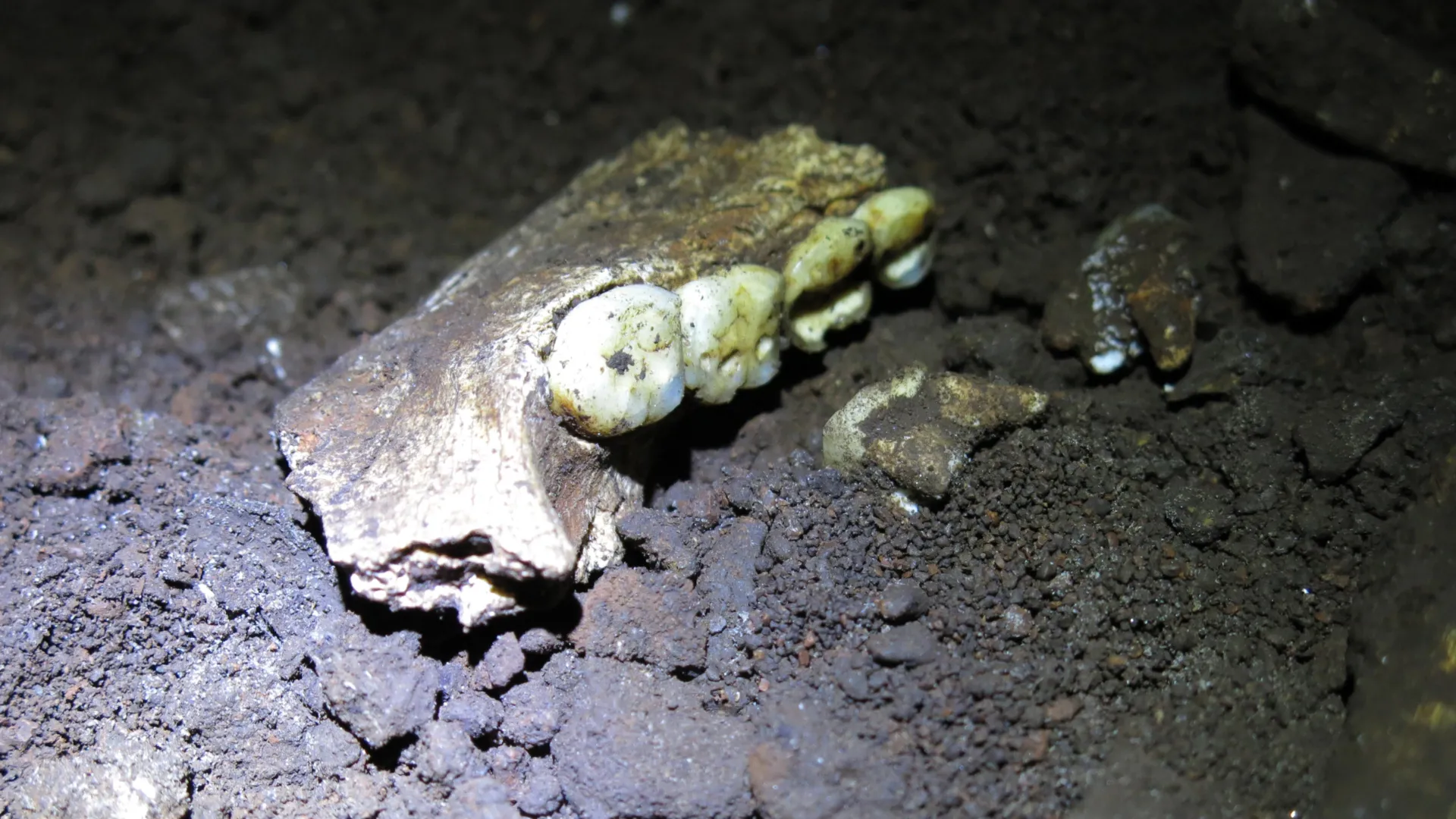
Researchers have analyzed ancient proteins extracted from Homo naledi fossils discovered in South Africa’s Rising Star Cave system, according to findings published in the journal Cell. The work involved an international team from the University of York, the University of Copenhagen, and more than 10 additional institutions. Homo naledi, an extinct human relative that lived approximately 335,000 to 241,000 years ago, has presented scientists with an unusual puzzle since its initial discovery in 2013.
The investigation focused on a longstanding mystery surrounding Homo naledi specimens recovered from the cave’s Dinaledi Chamber. Researchers observed that adult fossils showed remarkably limited physical variation between individuals, which contrasts with typical sexual dimorphism seen in other species. To explore this puzzle, scientists employed a technique involving gentle acid etching to extract peptide fragments from fossilized tooth enamel. The team examined 23 teeth from at least 20 different individuals and specifically searched for Amelogenin-Y, a protein produced from a gene on the male Y chromosome. The analysis revealed no evidence of this male-specific protein marker in any of the samples examined.
The findings were verified through amino acid analysis at the University of York’s chemistry facility, confirming the proteins were authentically ancient rather than products of modern contamination. The results suggest the Dinaledi Chamber may represent an exclusively female burial site, potentially indicating surprisingly sophisticated social customs among these ancient human relatives. If confirmed, this could demonstrate that deliberate single-sex burial practices existed in species other than modern humans.
However, researchers acknowledge alternative explanations for their findings. Extreme geographic isolation of the Homo naledi population could have caused genetic mutations affecting the gene responsible for producing Amelogenin-Y, meaning some individuals identified as lacking the male marker might actually have been male. The research represents the largest collection of individuals from an extinct hominin species examined using ancient protein analysis, demonstrating how tooth enamel’s protective properties enable the recovery of biological material spanning hundreds of thousands of years and revealing information unavailable from skeletal remains alone.
Article Attribution | Read More at Article Source
Article summary produced by Claude AI