

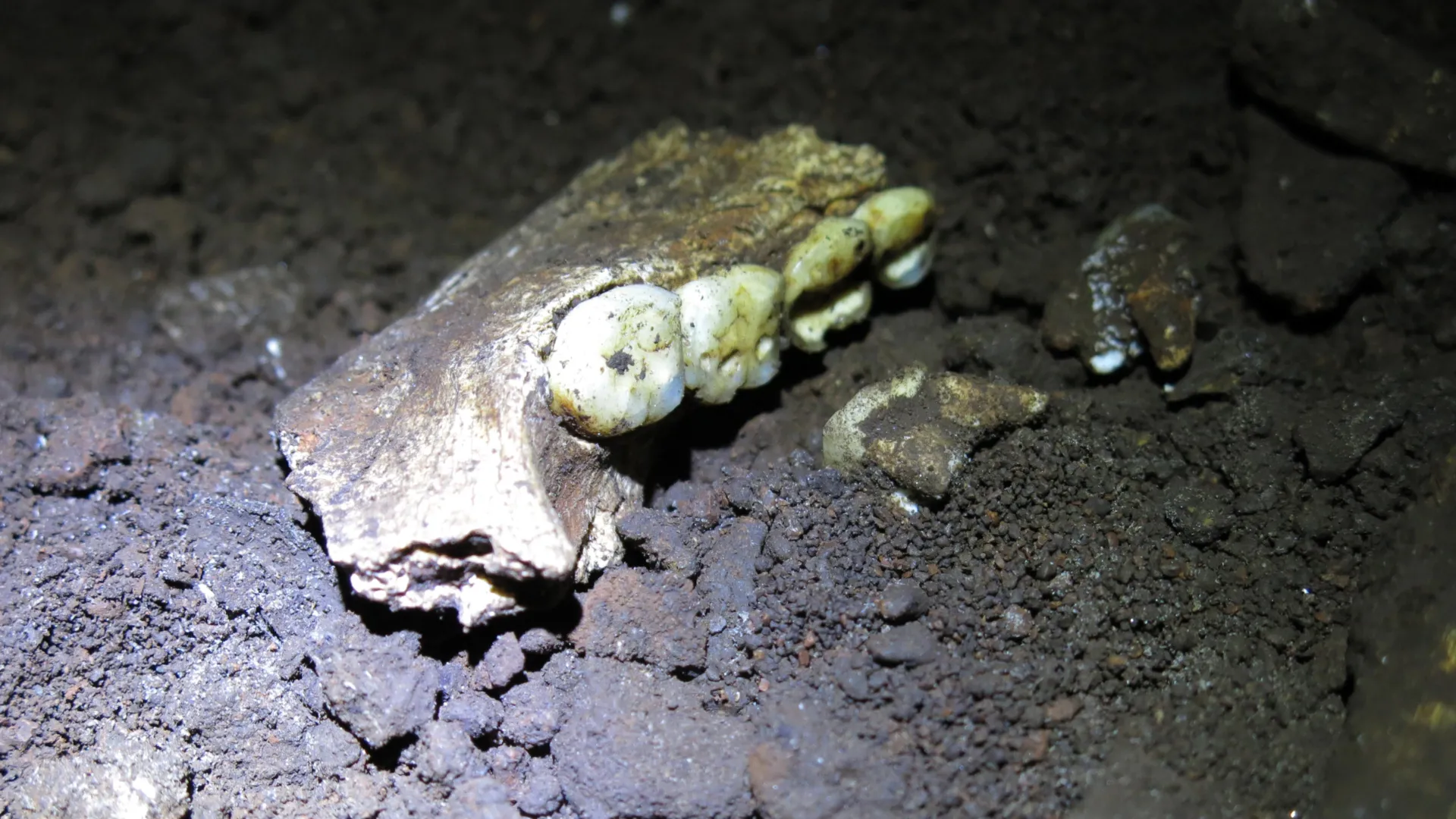
An international research team has published findings from a study of ancient proteins extracted from Homo naledi fossils discovered in South Africa’s Rising Star Cave system. The research, which appears in the journal Cell, examined 23 teeth belonging to at least 20 different individuals from the Dinaledi Chamber. Using advanced protein analysis techniques, scientists searched for Amelogenin-Y, a protein produced from a gene on the male Y chromosome, but found no evidence of this male-specific marker in any of the samples.
Homo naledi lived approximately 335,000 to 241,000 years ago and has been a subject of scientific interest since its discovery in 2013. The species exhibited a mixture of primitive characteristics resembling those of apes alongside features more closely associated with modern humans. One longstanding puzzle involved the remarkably uniform appearance of adult fossils recovered from the cave, with researchers unable to explain the lack of physical variation typically seen between males and females in other species.
The research team, involving institutions including the University of York and the University of Copenhagen, employed a technique using gentle acid etching to recover tiny protein fragments from fossilized tooth enamel while minimizing damage to the valuable specimens. Their findings raised the possibility that the Dinaledi Chamber may represent the earliest known burial location reserved exclusively for one sex by a human relative other than Homo sapiens. If accurate, this could suggest surprisingly elaborate social customs and symbolic burial traditions among these ancient human relatives.
However, researchers emphasized that alternative explanations exist for the findings. The genetic makeup of Homo naledi itself could account for the results if the population experienced extreme isolation, causing the gene responsible for producing Amelogenin-Y to mutate or disappear. Under such circumstances, some individuals might actually have been male despite lacking the protein normally used for identification. Dr. Marc Dickinson noted that the research opens a window into both the biology and social organization of ancient human relatives.
The study represents the largest collection of individuals from an extinct hominin species ever examined using ancient protein analysis. The durability of tooth enamel, which serves as the hardest tissue in the human body and shields proteins from environmental contamination for extended periods, made the analysis possible. The findings demonstrate how proteins preserved in ancient teeth can reveal information about extinct human relatives that skeletal remains alone cannot provide, potentially reshaping understanding of their social lives and burial practices.
Article Attribution | Read More at Article Source
Article summary produced by Claude AI