
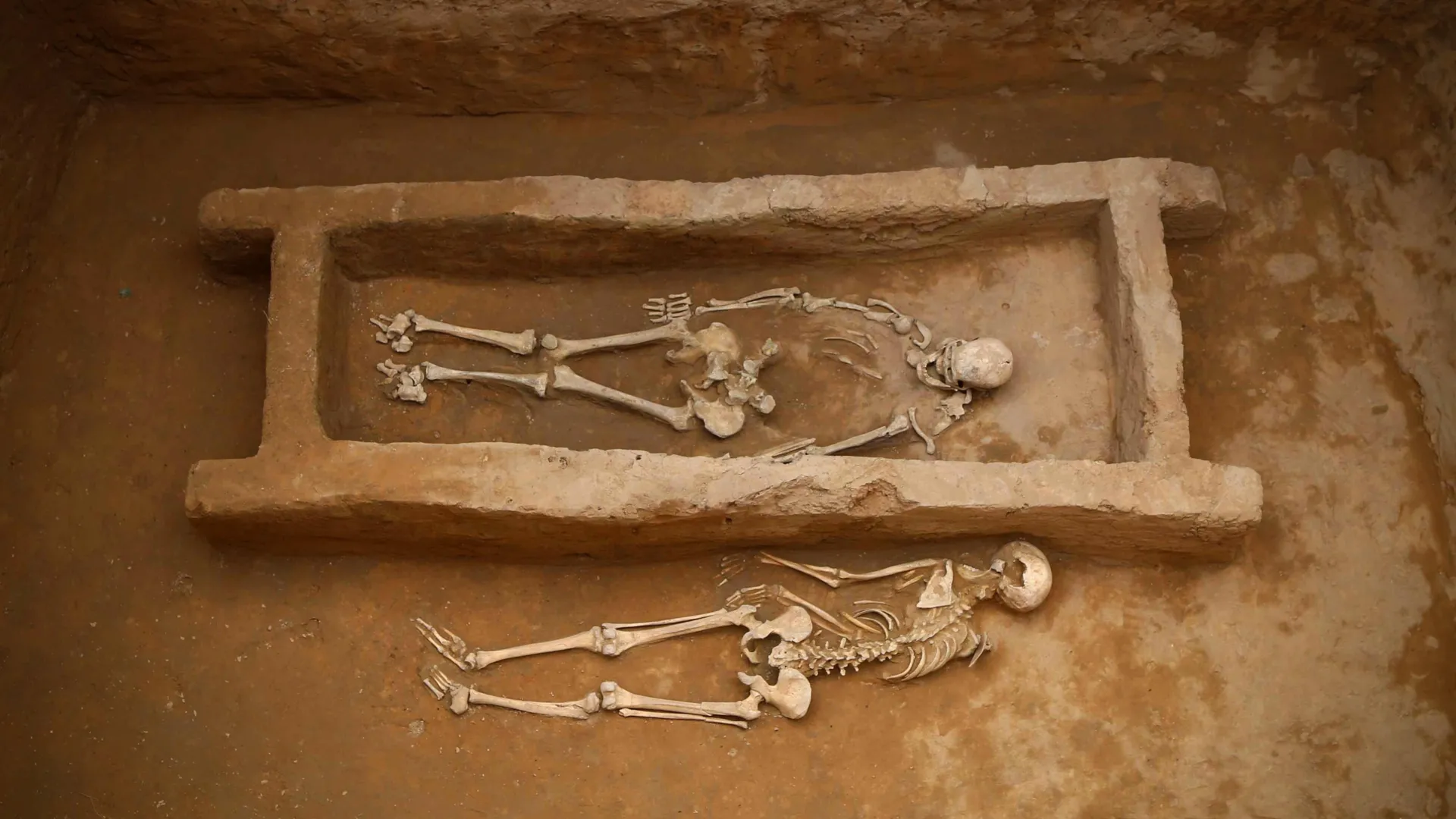
Researchers have completed a comprehensive genetic analysis of remains from Shimao, a significant late Neolithic settlement in northern Shaanxi Province, China, dating to approximately 4200-3700 years before the present. The study, led by Prof. Qiaomei Fu of the Institute of Vertebrate Paleontology and Paleoanthropology and published in Nature, examined nuclear DNA from 169 ancient human samples spanning 13 years of investigation. The settlement, which covered approximately four square kilometers and featured massive stone walls, served as a major population center with clear evidence of organized social hierarchies and ritual practices.
Genetic analysis revealed that Shimao’s inhabitants were primarily descended from local populations that had occupied the region roughly 1,000 years earlier. The research identified strong cultural and genetic connections to the Yangshao Culture, a prominent Neolithic civilization of the Loess Plateau region. Additionally, the population maintained extensive links with communities associated with Taosi Culture in southern Shanxi, steppe Yumin-related groups, and southern rice-farming populations, indicating substantial contact and exchange networks across diverse geographic areas and subsistence strategies.
The genetic evidence allowed researchers to reconstruct family relationships spanning as many as four generations, demonstrating that Shimao’s social organization was structured through patrilineal descent, in which status and inheritance passed through male lineages. Women typically followed patrilocal residence patterns, relocating to their partners’ family settlements. These kinship patterns provided the foundation for understanding how authority and social rank were distributed within the community.
A significant finding contradicted earlier archaeological interpretations regarding human sacrifice at the site. Near Shimao’s East Gate, approximately 80 human skulls had been discovered, representing an unusually large collection for Neolithic China. Genetic testing of burial samples revealed that roughly nine of ten individuals were male, overturning previous assumptions that sacrificial victims were predominantly female. The spatial distribution of remains indicated that male sacrificial victims concentrated near the East Gate while female remains appeared in elite cemeteries at other locations, suggesting ritual activities were deliberately organized by gender and location.
The research provides the first direct genetic evidence regarding inheritance of power, composition of ruling families, and social class formation at Shimao, offering new perspectives on the family systems and political structures that facilitated the emergence of early states in East Asia.