
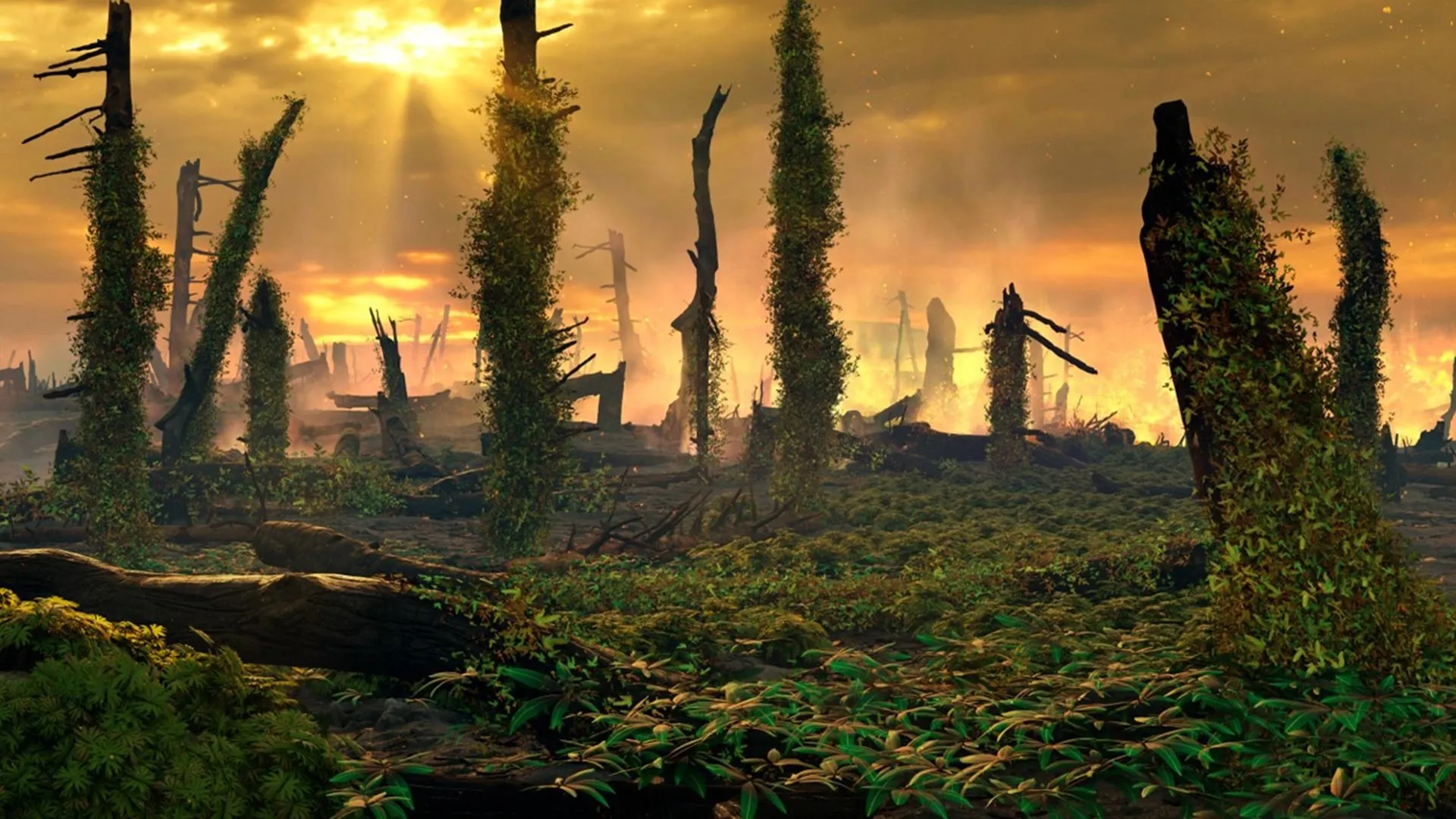
An international research team led by Utrecht University geologists has published findings indicating that ancient fern ecosystems in what is now Northwest Europe were highly susceptible to wildfires during the end-Triassic mass extinction. The extinction event, occurring approximately 201 million years ago, was preceded by massive volcanic eruptions associated with Pangea’s fragmentation, which released substantial amounts of carbon dioxide and raised global temperatures by an estimated 5 to 10 degrees Celsius.
As temperatures climbed, forest systems dominated by trees collapsed, and ferns rapidly colonized the damaged landscapes, creating savannah-like environments across large regions. To investigate wildfire activity from this distant geological period, researchers examined sediment from four drill cores, including a recently collected 640-meter core from the United Kingdom. The team measured fossil charcoal and polycyclic aromatic hydrocarbons (PAHs), organic compounds produced during wildfires, and combined these findings with fossil pollen and spore records. These analyses revealed a sharp increase in fire activity during the main extinction phase, coinciding with dramatic fern expansion.
Recognizing limitations in traditional fire-tracking methods, the research team developed an innovative approach using what they termed the Palynomorph Darkness Index, which measures color changes in fossil pollen and spores. Analyzing approximately 15,000 measurements revealed an unusual “Dark Zone” in the fossil record corresponding precisely to the fern spike, extinction interval, and elevated charcoal and PAH levels, indicating an extended period of severe wildfire activity.
The findings suggest that certain fern species created favorable conditions for widespread fires through a self-perpetuating cycle. Dense mats of dried fern material acted as ideal fuel for massive wildfires, while the plants’ ability to rapidly regenerate from underground root systems allowed them to quickly recolonize burned areas and spread further. The research team estimates this fern-dominated, fire-intensive interval persisted for between 40,000 and 300,000 years. The study was published in Nature Geoscience on July 21, 2026.
Article Attribution | Read More at Article Source
Article summary produced by Claude AI