
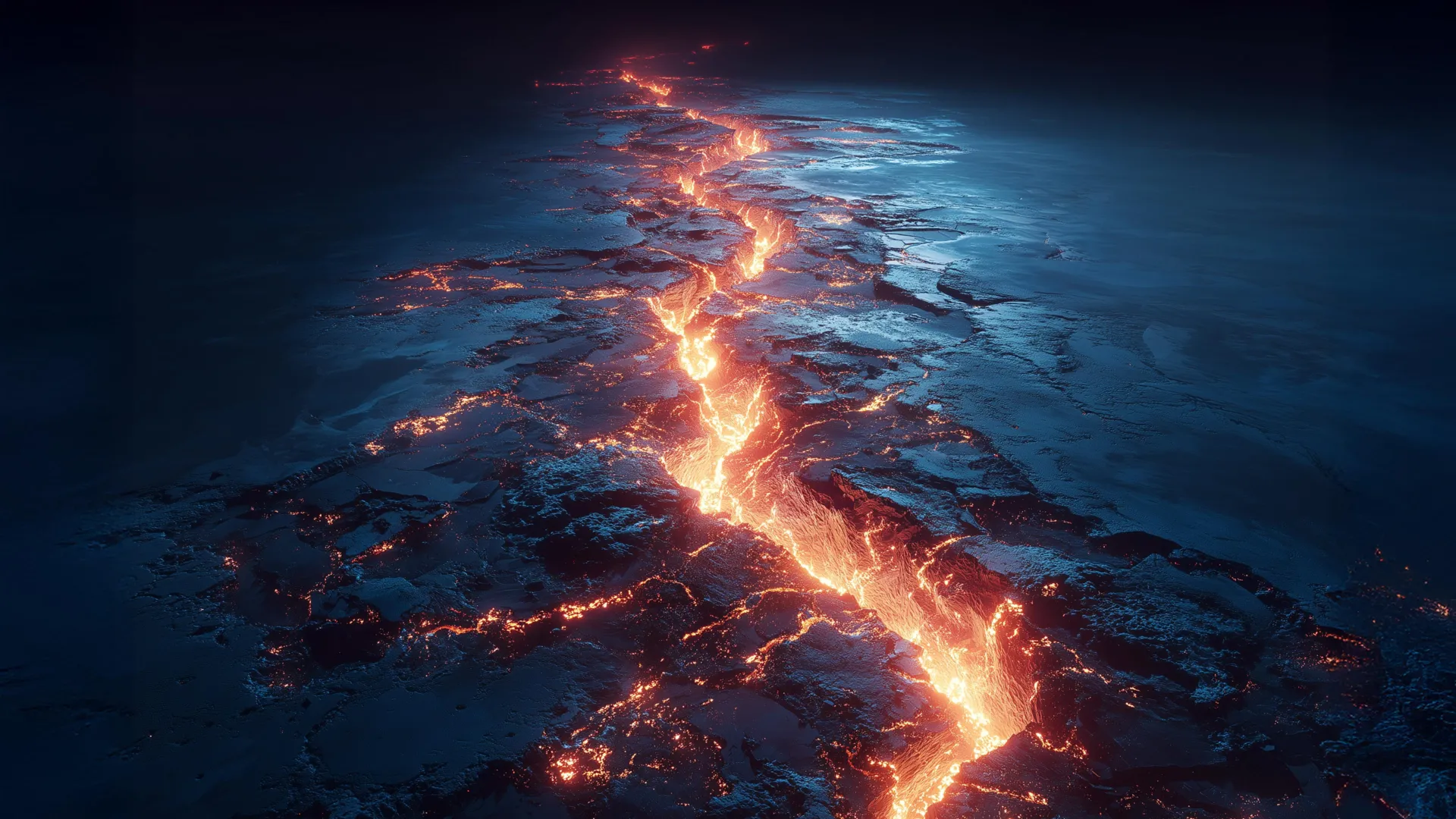
Researchers from Japanese institutions have identified dramatic structural changes in the oceanic plate beneath the Ontong Java Plateau, one of Earth’s largest oceanic plateaus located in the western Pacific Ocean. Using seismic wave analysis, the team detected evidence of vertical magma pathways called dikes that cut through horizontal layers of the plate, creating a far more complex interior structure than typical oceanic plates possess. The findings indicate that extraordinary volcanic activity approximately 110-120 million years ago left a lasting imprint on the plate’s internal architecture.
The Ontong Java Plateau formed during what scientists regard as the largest volcanic event in Earth’s history, when immense quantities of lava erupted onto the seafloor. Researchers propose this eruption was driven by a thermochemical plume—a column of unusually hot material rising from Earth’s mantle that also carried chemical components distinct from the surrounding mantle rock. The eruption released sufficient heat and gases to potentially disrupt global environmental conditions and may have contributed to mass extinctions by altering ocean chemistry and oxygen availability.
The research team analyzed seismic waves recorded by ocean-bottom instruments to probe the plate’s interior. They found that waves typically associated with oceanic plates behaved unusually in this region, with certain wave types traveling efficiently while others weakened dramatically. Seismic modeling revealed the presence of both horizontal layering and vertical dike swarms—networks of ancient magma channels that crosscrossed the plate.
Beyond structural changes, the scientists identified evidence suggesting the magma chemically transformed the surrounding rock through a process called refertilization. This occurs when magma restores chemical components to mantle rock that had previously lost them. The seismic data showed that waves traveled more slowly through the altered material than expected, indicating changes in the rock’s mineral content and physical properties.
The findings, published in Geophysical Research Letters, suggest that massive volcanic events can fundamentally reshape oceanic plates through both mechanical fracturing and chemical modification, providing new insights into how large volcanic provinces influence Earth’s interior structure.
Article Attribution | Read More at Article Source
Article summary produced by Claude AI