
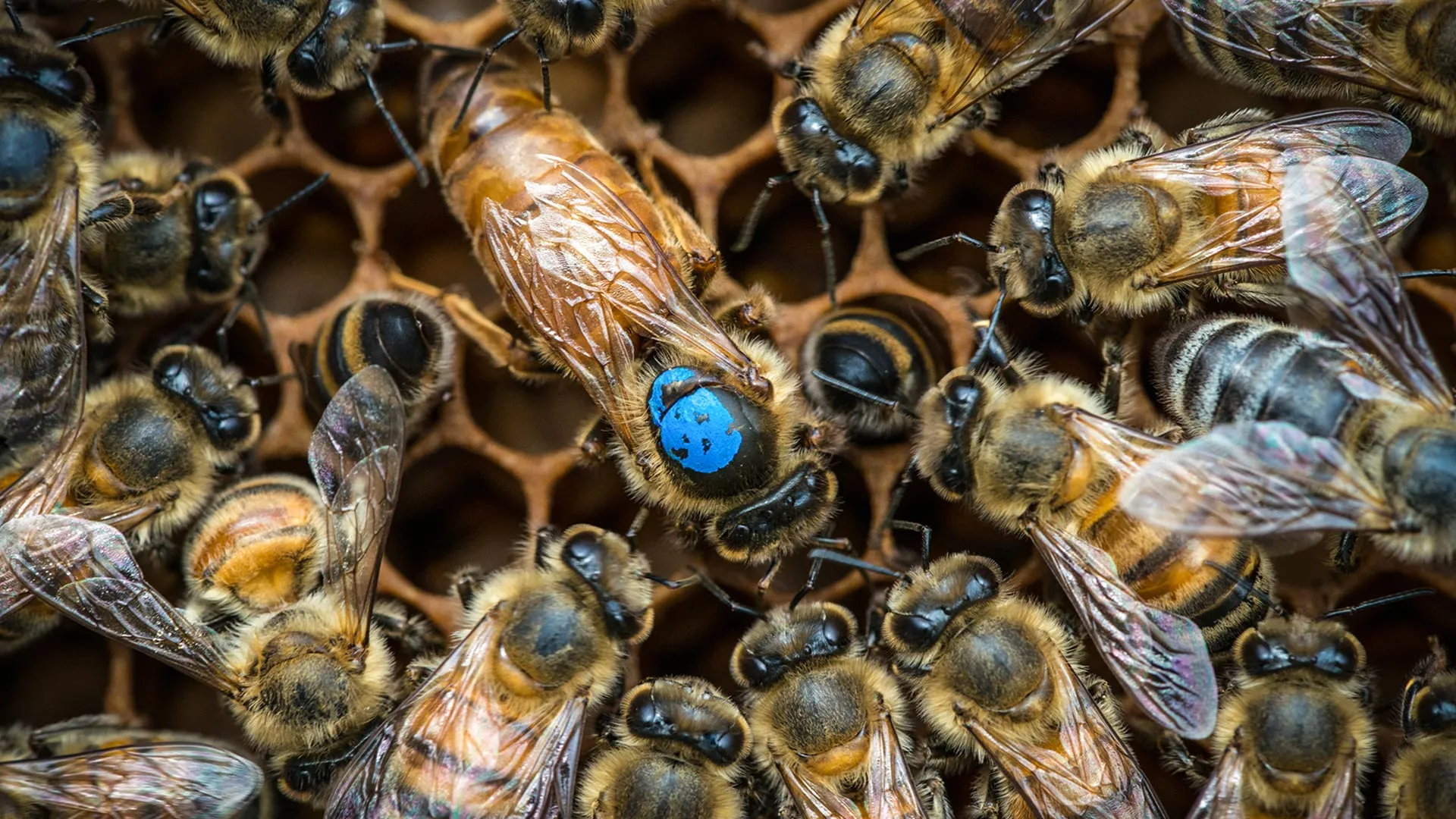
Researchers from Heinrich Heine University Düsseldorf and universities in Cologne and Frankfurt/Main have identified neural circuits responsible for controlling task assignment in honeybee colonies. The findings, published in the Proceedings of the National Academy of Sciences, demonstrate how bee colonies organize their workforce efficiently despite lacking a central authority figure to assign responsibilities.
Worker bees typically progress through different roles as they age, beginning with caring for the queen and developing larvae, then transitioning to hive construction, maintenance, and defense, and finally foraging for food in their final life stage. This behavioral progression involves interactions among approximately one million neurons in the bee brain, yet the neural mechanisms underlying these age-dependent changes had remained unclear until this research.
The investigation built upon earlier work by Professor Martin Beye’s team at HHU studying a gene called doublesex. Researchers observed that deactivating this gene in older worker bees caused them to resume caring for the queen, a task normally performed only by younger bees. Since doublesex operates exclusively within certain neural circuits, this provided a pathway for scientists to examine how specific brain regions influence social behavior.
To further understand these mechanisms, the research team selectively silenced neurons associated with doublesex using a protein that suppresses neural activity. When this protein was activated through controlled feeding, older workers reverted to queen-care duties instead of their age-appropriate tasks. When the circuits remained active, bees exhibited normal age-dependent behavior patterns.
The findings suggest that task organization within bee colonies has a neurological basis rooted in communication between different neural circuits. This research offers new insights into how animals achieve complex social cooperation without predetermined blueprints for task distribution, with implications for understanding innate behavioral diversity and collective organization across species.
Article Attribution | Read More at Article Source
Article summary produced by Claude AI