
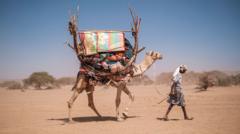
Rising temperatures across Africa are placing severe stress on camel populations, traditionally considered resilient animals suited to desert climates. In the Afar region of northeastern Ethiopia, herders report increasing losses of camel calves to extreme heat, with observations of blisters, dehydration, and skin damage. One herder with approximately 500 animals lost eight calves within a month and noted that environmental conditions have intensified significantly in recent years.
Scientific research documents widespread impacts across the continent. A 2025 study of camel herders in southern Ethiopia found that high temperatures and climate variability have harmed herd health, productivity, and reproduction. In Somalia, research published in June determined that drought-linked camel mortality affects nearly 46% of camel-owning households, with mortality rates reaching approximately 73% in the Sool region. Veterinary officers in Kenya report a 15% increase in camel deaths over the past two years, with rising cases of hyperthermia and secondary infections.
Experts explain the biological mechanisms behind the crisis. Camels typically tolerate temperatures up to around 40 degrees Celsius by allowing their body temperature to fluctuate and minimizing water loss through reduced sweating. However, when temperatures exceed 41 to 45 degrees Celsius for extended periods, cellular damage occurs and immune function deteriorates. This heat stress reduces food intake, causes lethargy, and leads to decreased milk production and reproductive disorders. Additional challenges including vegetation loss, water scarcity, and limited veterinary services compound the animals’ suffering.
The Horn of Africa has experienced the longest recorded drought from 2020 to 2023, with another severe drought period now underway. Water prices in some Somali areas have risen over 2,000% due to drought conditions. Some herders in Ethiopia have permanently relocated camels from northern to southern regions where resources remain more available, representing a fundamental shift from traditional seasonal migration patterns. The World Meteorological Organization reports that extreme heat events have become common across North Africa, with temperatures exceeding 50 degrees Celsius recorded in multiple countries in 2024, and warming occurring at 0.43 degrees Celsius per decade in North Africa between 1991 and 2025.
Article Attribution | Read More at Article Source
Article summary produced by Claude AI