
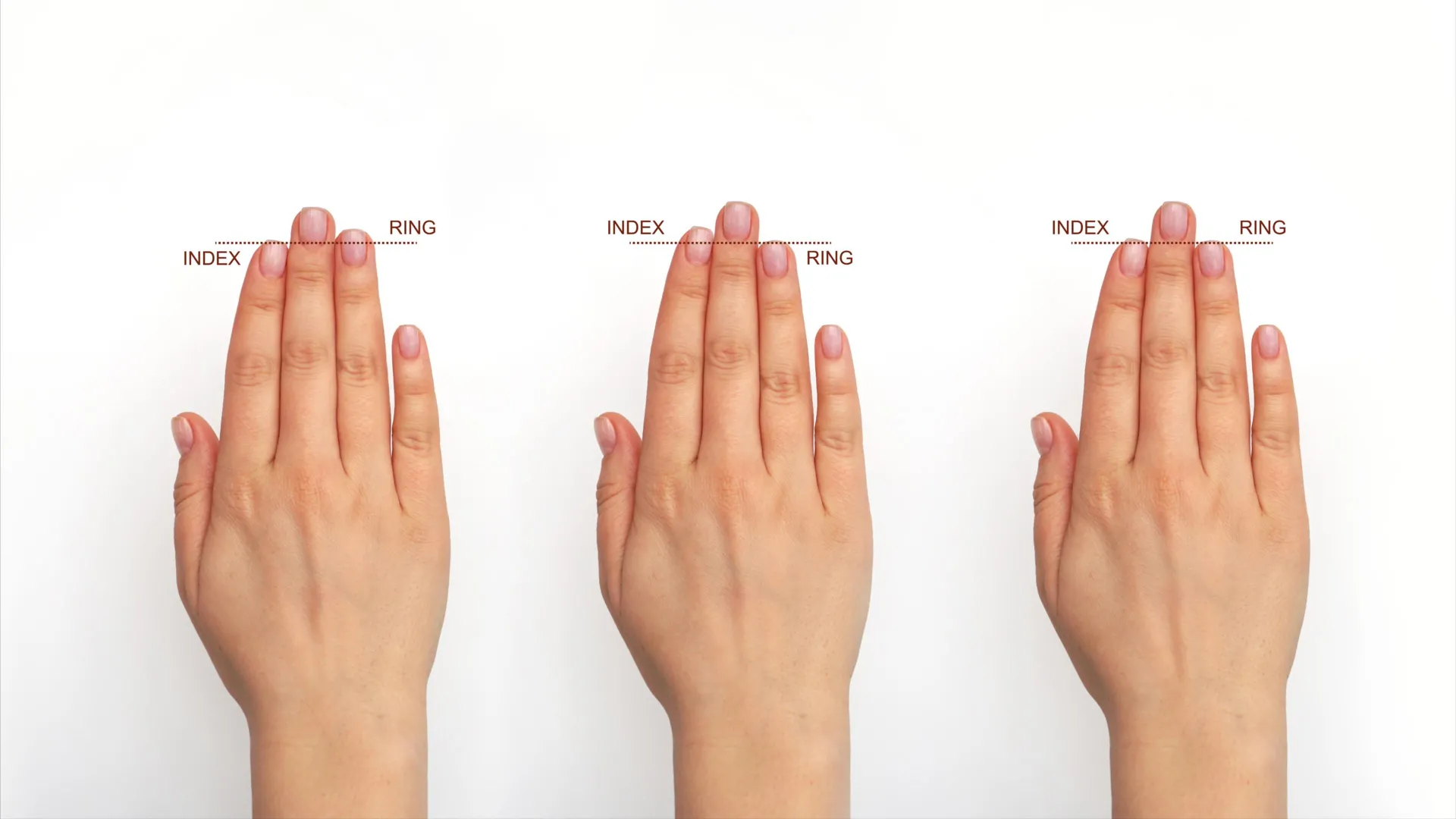
Researchers from Swansea University and Istanbul University have published findings suggesting a link between prenatal hormone exposure and brain development in newborns. The study examined 225 infants, measuring their digit ratio—the comparative lengths of the index and ring fingers—alongside head circumference as a proxy for brain size.
Digit ratio serves as an indirect indicator of the hormonal environment a fetus experienced during early pregnancy. A higher ratio, where the index finger is longer than the ring finger, generally reflects greater prenatal estrogen exposure relative to testosterone. Previous research has established associations between this measurement and various health outcomes.
The research team discovered that boys displaying higher digit ratios also tended to have larger head circumferences, suggesting a connection between elevated prenatal estrogen and increased brain size. This relationship was not observed in the girls examined in the study. The findings were published in the journal Early Human Development.
These results align with the estrogenized ape hypothesis, a theory proposing that human brain expansion occurred alongside skeletal changes that made humans physically more feminine compared to earlier ancestors. According to the researchers, this hormonal influence on brain development may have carried biological trade-offs for males, including elevated risks of cardiovascular problems, reduced fertility, and susceptibility to certain conditions. Despite these potential costs, the evolutionary advantages of larger brains may have outweighed these drawbacks.
The researchers emphasize that digit ratio functions as a possible marker of hormonal exposure rather than a direct determinant of brain size. The study identifies an association that may provide insight into how prenatal hormones shaped human evolutionary development.
Article Attribution | Read More at Article Source
Article summary produced by Claude AI