
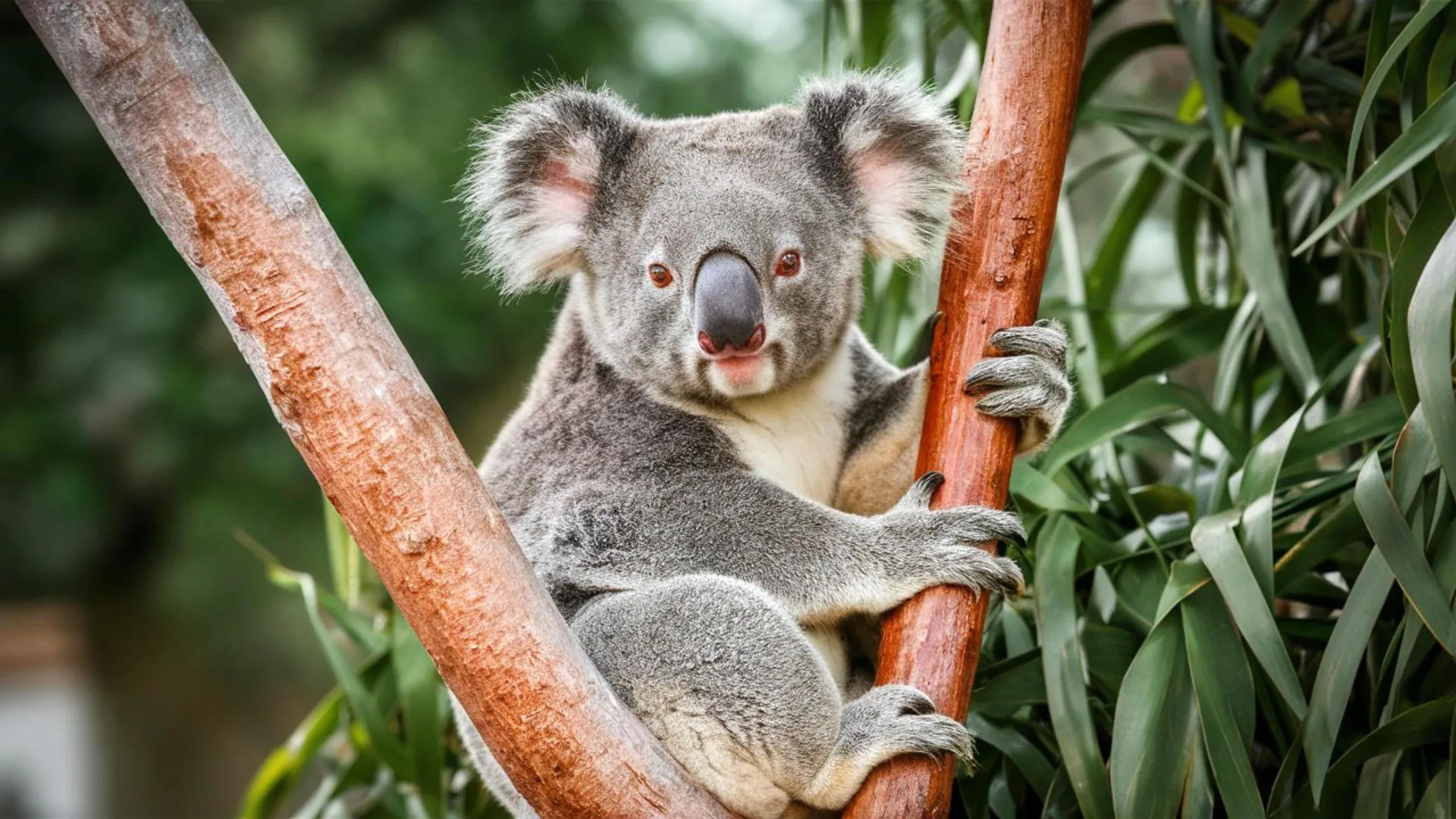
Researchers from the University of Sydney and Texas A&M University have completed a comprehensive genomic analysis that sheds new light on koala evolutionary history. The study, published in Molecular Biology and Evolution by Oxford University Press, indicates that koalas underwent a dramatic population collapse approximately 100,000 years ago, substantially earlier than previously believed based on earlier research suggesting declines occurred only after human arrival in Australia.
To reconstruct this ancient history, scientists led by PhD student Toby Kovacs sequenced the genomes of four parent-offspring koala trios to calculate the species’ mutation rate, which they found to be approximately half that of humans. This represented the first direct mutation rate estimate for koalas or any member of the marsupial order Diprotodontia. The team then applied this newly measured rate to 457 koala genomes, allowing them to trace population changes over thousands of years with greater accuracy than previous studies that had relied on mutation rates from distantly related mammals.
The analysis reveals that koalas experienced a critical genetic bottleneck around 60,000 years ago during the late Pleistocene glacial period, a time marked by cold, dry conditions and environmental upheaval. Australia’s landscape shifted dramatically during this era, with the expanding Nullarbor Plain creating vast semi-arid regions that reduced suitable koala habitat and separated eastern and western populations. The western population eventually vanished entirely, while a small eastern population survived the harsh conditions.
When environmental conditions improved during the current interglacial period, the surviving eastern population expanded and eventually divided into five genetically distinct groups between 16,500 and 6,000 years ago. These populations ultimately gave rise to modern koalas found along Australia’s east coast. Genetic analysis of recent generations indicates that populations in Queensland and New South Wales have continued declining, while Victorian populations appear to be stabilizing. Since 2022, koalas have held official endangered status in Queensland, New South Wales, and the Australian Capital Territory. Scientists believe understanding these historical population patterns can improve modern conservation strategies by helping protect genetic diversity and inform decisions about protecting koalas from contemporary threats including habitat loss, disease, bushfires, and hunting.
Article Attribution | Read More at Article Source
Article summary produced by Claude AI