
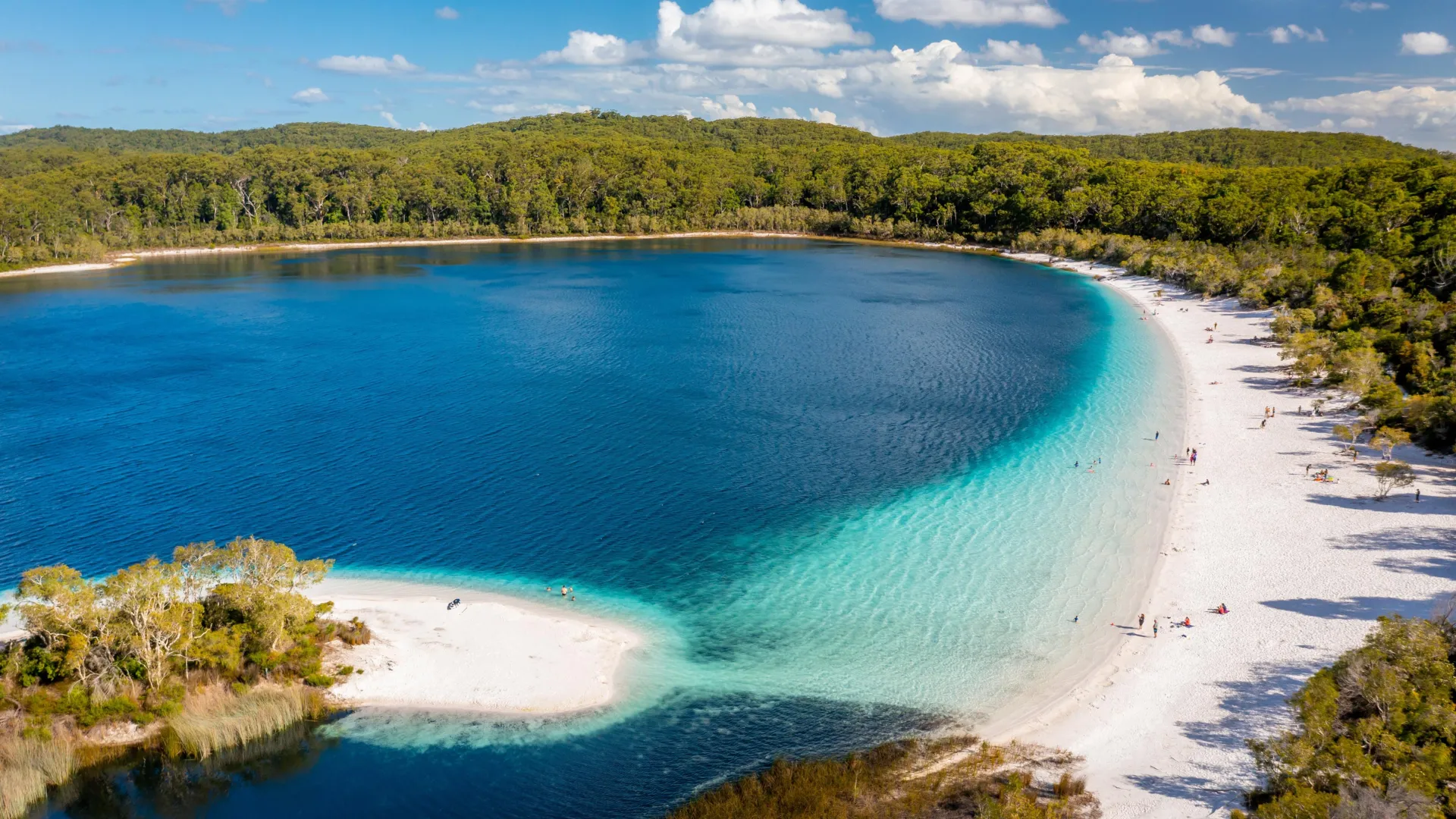
Scientists at the University of Adelaide have discovered evidence that several of K’gari’s largest and deepest lakes disappeared roughly 7,500 years ago, despite occurring during a period characterized by higher rainfall and thousands of years after the last Ice Age. The findings, published in Quaternary Science, suggest that even the most substantial freshwater lakes on the world’s largest sand island may be more vulnerable to drying than previously believed.
What distinguishes this discovery is the apparent paradox: the lakes dried during a relatively wet climate phase. Associate Professor John Tibby, the lead researcher, notes that while Australian lakes typically dry during periods of low rainfall, such as the Millennium Drought, the K’gari lakes had existed for between 35,000 and 55,000 years yet disappeared during an era of heavy rainfall. This unexpected finding indicates that the survival of these lakes depends on factors beyond total regional rainfall.
Researchers believe ancient wind patterns may explain the drying event. Dr. Harald Hofmann from CSIRO suggests that south-east trade winds prevalent at the time may have redirected rain toward the nearby island of Minjerribah rather than K’gari. Trade winds can significantly influence cloud formation and precipitation patterns across broad regions, meaning that rainfall intensity alone does not guarantee water reaches particular locations or recharges lake systems.
The research team identified the drying period by analyzing sediment cores from K’gari’s oldest lakes. Sediment layers contain records of past environmental conditions through materials such as pollen, sand, and organic matter. A gap in sediment accumulation between 7,500 and 5,500 years ago indicates that water no longer covered portions of the lake basins during this interval.
The findings carry implications for future conditions, as climate projections indicate drier overall conditions combined with more intense rainfall events. Powerful storms may not deliver usable water if precipitation falls in wrong locations, runs off too rapidly, or fails to recharge underlying systems. For the Butchulla people, K’gari’s Traditional Owners, the lakes hold deep cultural and spiritual significance as sacred sites essential to preserve for future generations.
Article Attribution | Read More at Article Source
Article summary produced by Claude AI