
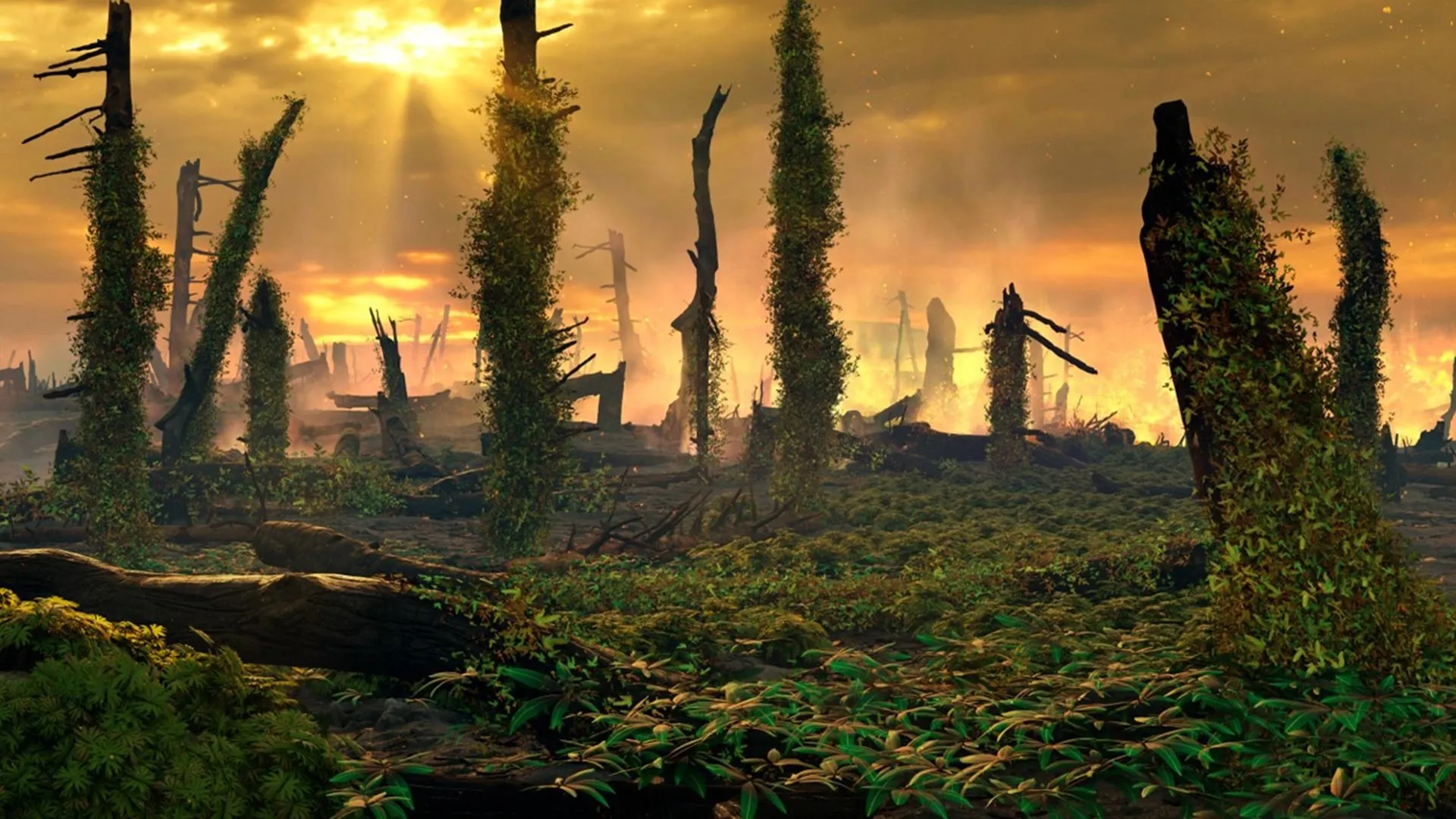
An international research team led by Utrecht University geologists has identified evidence of intense wildfire activity during the end-Triassic mass extinction period, approximately 201 million years ago. The extinction event followed massive volcanic eruptions associated with the breakup of Pangea, which released significant quantities of carbon dioxide and raised global temperatures by an estimated 5 to 10 degrees Celsius. As temperatures climbed, forests collapsed and were rapidly replaced by ferns across what is now Northwest Europe, transforming the landscape into savannah-like environments.
To investigate wildfire patterns from this ancient period, researchers examined sediment cores, including a recently collected 640-meter core from the United Kingdom. They measured fossil charcoal and polycyclic aromatic hydrocarbons—organic compounds produced during wildfires—alongside fossil pollen and spore records. The team also developed a novel measurement technique called the Palynomorph Darkness Index, which quantifies color changes in organic microfossils to track ancient fire activity. This method revealed an unexpected pattern: pollen and spores from the extinction interval became progressively darker, creating what researchers termed a “Dark Zone” that corresponded precisely with the fern expansion and elevated wildfire markers.
Ferns proved to be both a product of and contributor to the environmental crisis. These resilient plants rapidly colonized damaged landscapes, with certain species capable of surviving fires through underground root systems and regrowing quickly. However, when dried fern mats accumulated across the landscape, they created ideal fuel for massive wildfires. Some fern species functioned as “fire ladders,” allowing flames to spread more effectively while suppressing competing vegetation. This created a destructive cycle in which climate warming and forest loss enabled fern proliferation, which then supplied abundant fuel for recurring wildfires that further spread the plants across the landscape.
Research indicates the fern-dominated interval persisted for at least 40,000 years and possibly up to 300,000 years. The findings, published in Nature Geoscience, underscore how combinations of climate change, deforestation, and invasive species can create conditions for environmental catastrophe. Scientists note that understanding these ancient dynamics offers lessons about how interconnected environmental stressors can trigger self-reinforcing cycles of ecological degradation.
Article Attribution | Read More at Article Source
Article summary produced by Claude AI